패, 경, 옥 이런 이국 소녀들의 이름과, …… ‘프랑시스 잠’, ‘라이너 마리아 릴케’, 이런 시인의 이름을 불러 봅니다.
윤동주의 「별 헤는 밤」(1948)은 패(佩), 경(鏡), 옥(玉)과 프랑시스 잠(Francis JAMMES), 라이너 마리아 릴케(Rainer Maria RILKE)를 나누어 이국 소녀들과 시인의 이름이라 읊으나 어린 날 내겐 이 이름 모두 이국의 정취를 불러들였다. 외국(外國)보다 이국(異國)이란 말이 전하는 정서적 거리는 남다르다. 이국 취향의 구성은 단순한 물리적 거리 이상으로 낯섦에서 오는 동경(憧憬)이 도사리고 있다. 사실 실제 거리는 중요하지 않다. 뒤섞여 혼재된 취향이 어떤 정체를 지니는가가 더 중요해 보인다. 혹은 어떤 결정화(crystallization)를 지니는가가 중요해 보인다.
하와이로부터, 세르비아 거쳐, 후르츠로
최가영의 흐름은 세르비아로부터, 하와이 거쳐, 후르츠로가 맞다. 그러나 이 글은 하와이로부터, 세르비아 거쳐, 후르츠로 향하겠다. 내가 최가영을 접하게 된 시간순이다.
하와이로부터
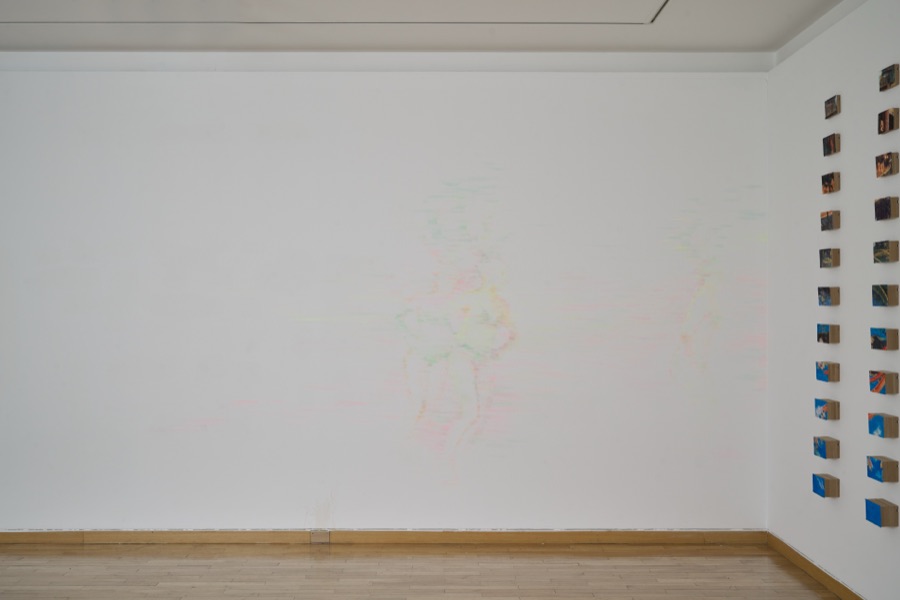
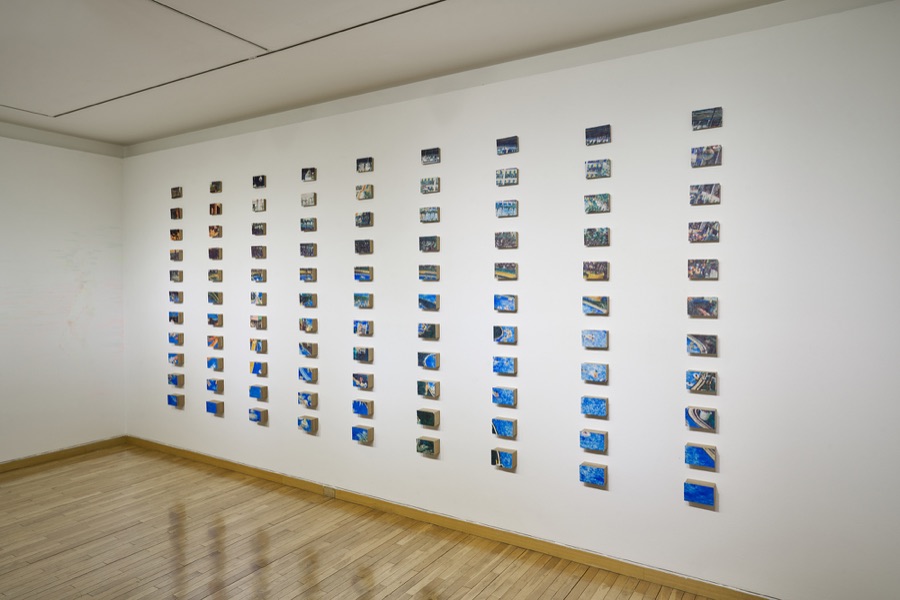
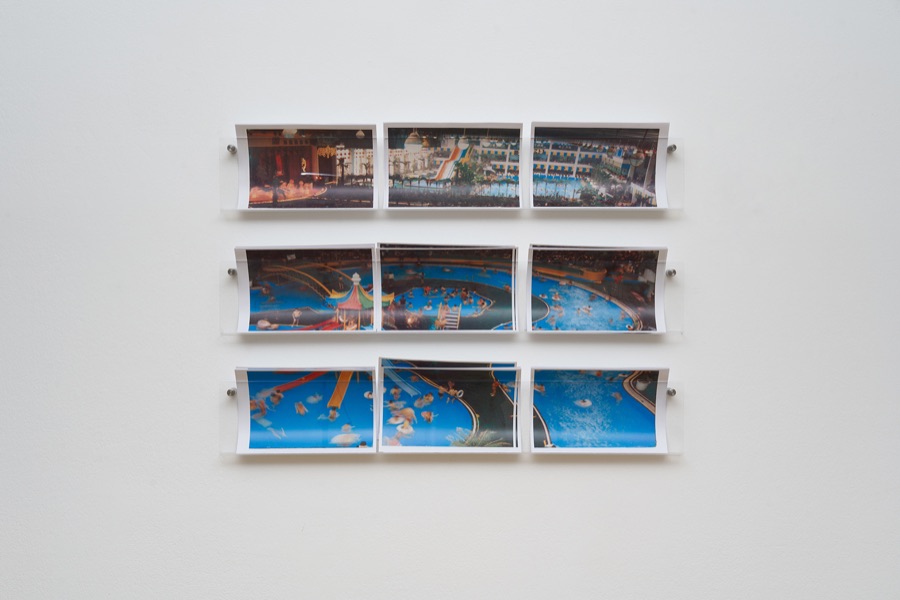
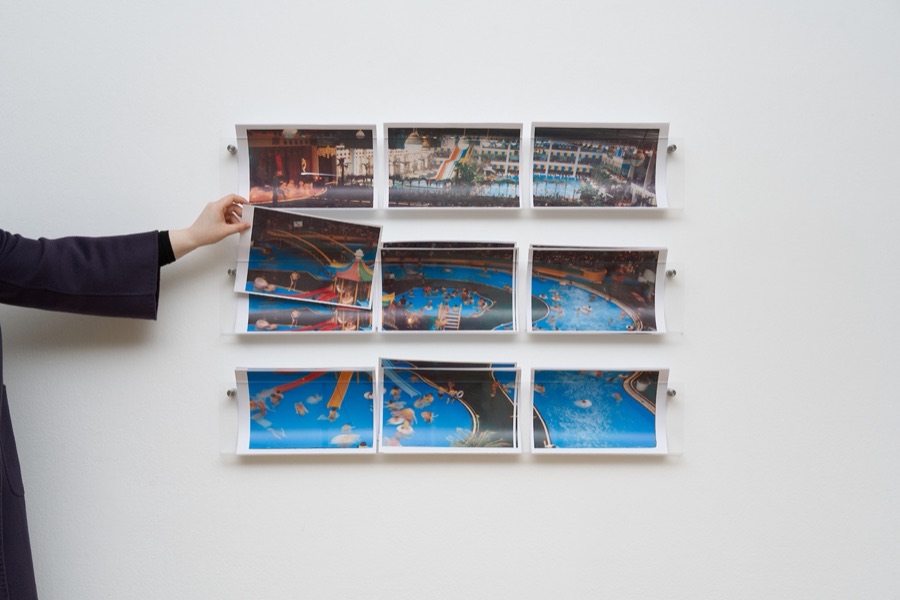
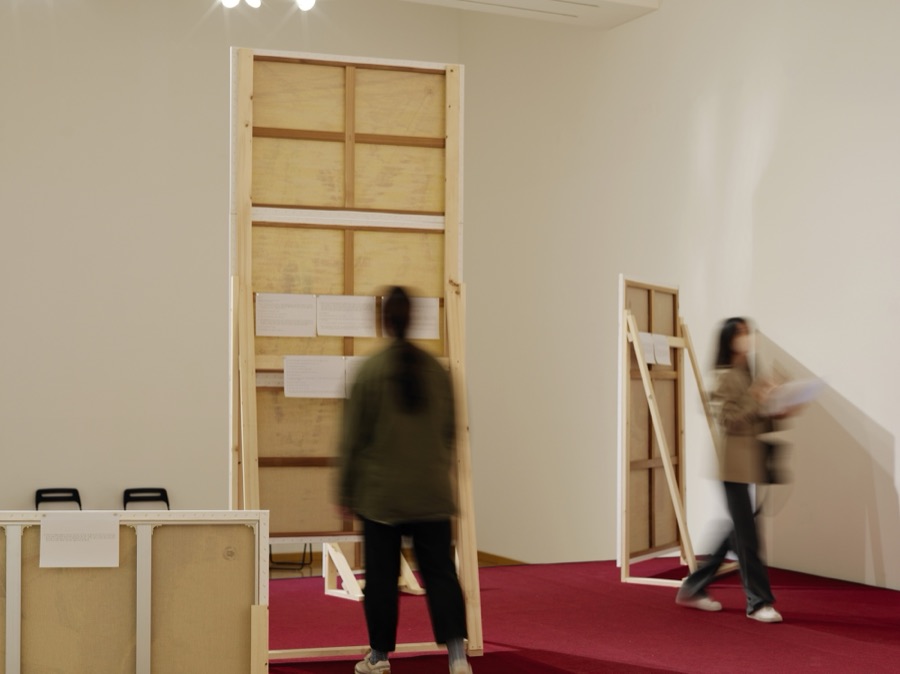
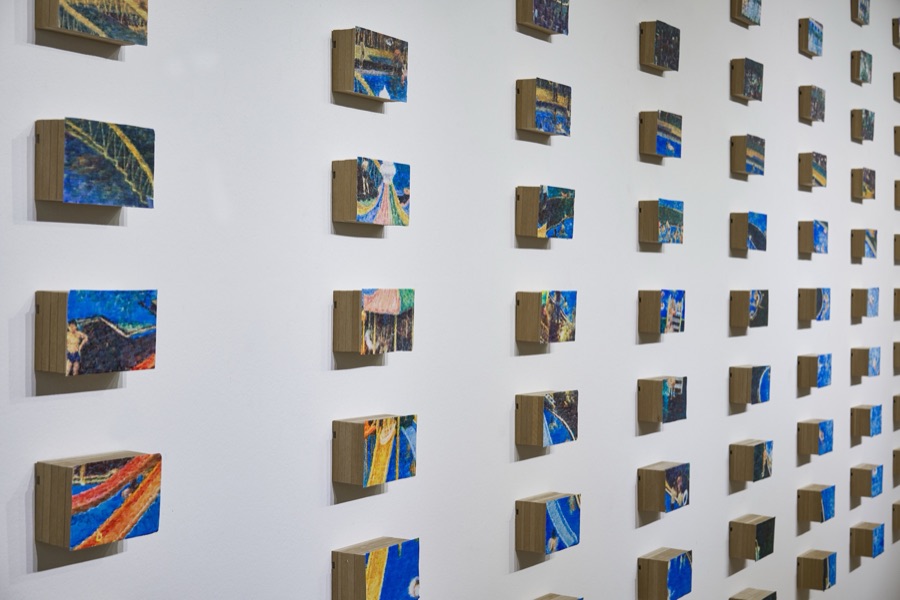
1976년 개장한 경기도 용인자연농원은 1996년 명칭을 변경하여 에버랜드가 됐다. 같은 땅의 테마파크가 ‘삶의 질 향상을 위한 시간과 공간의 무한한 가치를 창조해 나가자’라는 기치로 재편된 것이다. 에버랜드가 꿈과 희망의 터전으로 승승장구하던 때, 자연농원보다 후발주자로 1979년 개장한 경남 창녕군 부곡하와이는 1990년대 이후 쇠락하다가 2017년 폐업하고 말았다. 최가영의 《Survival in Fantasy》에 대해 얘기하려다 사설이 길었다. 《Survival in Fantasy》는 2022년 금호미술관에서 개최된 최가영의 개인전이다. 우연히 전시에 들렀다가 홀연 마음이 흔들리고 말았다. 왜냐면 나는 부곡하와이 키즈다. 99장으로 이루어진 〈아흔 아홉 조각의 부곡하와이-1984년 J로부터〉(2022)를 들여다보며 스테이지(무대라는 말보다 이국 취향이 점철된 스테이지가 이 순간에는 더 적절하다) 위에서 춤추던 무용수들을 넋 놓고 바라보던 어린 날로 회귀했다. 최가영이 이베이(eBay)에서 우연히 찾은 J(재키 Jacky)의 엽서로부터 점화된, 99장으로 쪼개어진 그 시절 부곡하와이. 화려하고 현란했던 그 무대, 온갖 열대 식물로 꾸며진 그 공간, 돌고 도는 미온수를 따라 알록달록 수영복을 입었던 그때 그 사람들, 나름 긴 길이를 자랑하던 그 물미끄럼틀(워터슬라이드로는 설레임을 녹여내기 어렵다)이 99장으로 조각난 회화로부터 서로 엉겨 붙으며 되살아났다. 이 작품은 마치 렌티큘러(lenticular)처럼 아롱 어른거리는 이미지가 간격을 두고 배열되어 있었는데 간격이 되는 흰 배경이 기억의 틈바구니가 되어 오히려 실제와 상상이 뒤엉킨 그날들을 연상시켰다. 이처럼 내겐 구체적 경험이 최가영의 회화를 통해 복기되었다면, 최가영에겐 상상의 장소가 J의 엽서와 낮은 화질로 기록된 부곡하와이 홈비디오를 통해 구성되어 입체화되었다. 물론 그녀는 “점점점 뭔가 상상의 두께가 이렇게 쌓이는 것 같은 경험……그럼에도 불구하고 이 경험의 공백은 절대 채워질 리가 없겠구나” 싶었다고 말했다. J로부터 촉발된 이국 취향이 다시금 무대 위에 재상연되었지만, 만나본 적 없는 J를 비롯한 그 시절 사람들 대신 열대 식물이 그 의미를 대신했다. 폐장 전에 한 번쯤은 최가영이 닿을 법도 했을 부곡하와이는 옅은 시차를 두고 그녀와 벌어지고 말았고 부곡하와이에 대한 인터뷰가 회화 앞면에서 채 다루지 못한 기억을 뒷면에서 벌충하는 구조를 취했다.
세르비아 거쳐
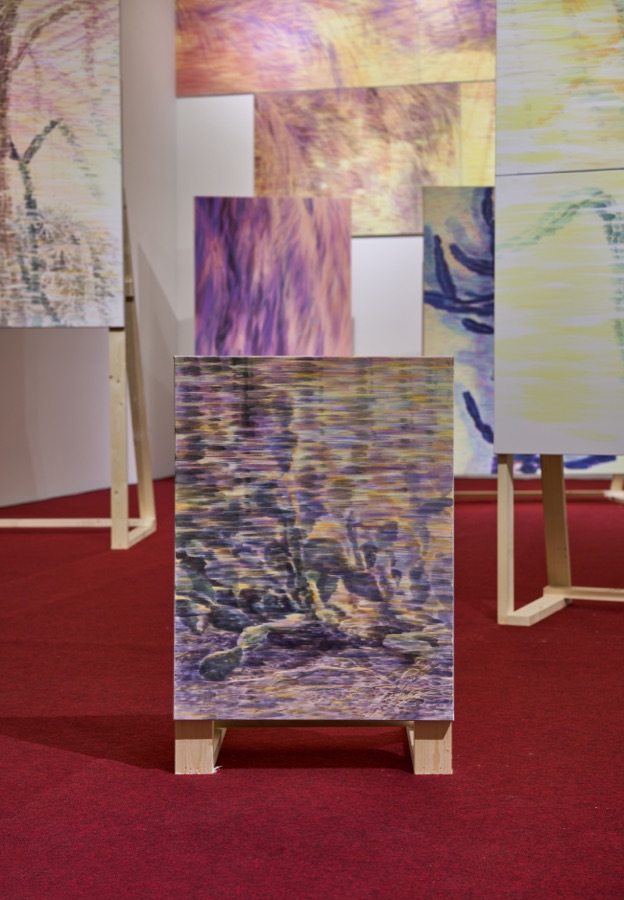
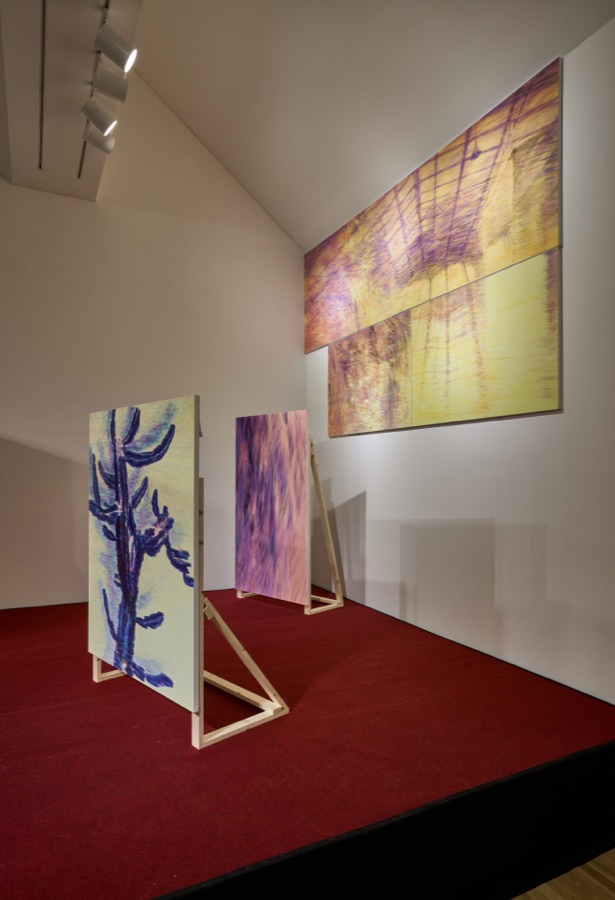
이보다 앞선 2020년 공간형에서 열린 최가영의 개인전 《세르비아의 산, 채석장, Венчац》(공간 형, 서울, 2020)에 대해서도 할 말이 있다. 프랑스, 독일, 영국 이런 나라보다 세르비아라니! 외국이라 하기엔 이국에 더 가깝지 않은가. 세르비아 벤차스 채석장을 그린 최가영의 《세르비아의 산, 채석장, Венчац》를 보면서도 말문이 막혔다. 부곡하와이가 나와 최가영 사이 세대에 빗금을 긋는다면, 세르비아는 그곳에 방문한 적 있는 나와 나 이외의 사람들을 무리 짓는다. 나만의 특수한 경험이라고 하기엔 다소 무리가 있지만 세르비아 남부 작은 마을에서 열린 결혼식에 초대받아서 에밀 쿠스트리차(Emir KUSTURICA, Емир КУСТУРИЦА) 영화에 나올법한 춤을 췄던 날이 있다. 그런데 정작 《세르비아의 산, 채석장, Венчац》의 당사자 최가영은 그곳에 가본 적이 없었다. 오히려 이 전시를 계기로 2023년 가을 세르비아에서의 전시가 성사됐다. 이 전시는 세르비아 작가 M(마리아 Maria)으로부터 현지 사진을 받아 사진 속 산을 직접 걷고 둘러본다는 기분으로 회화를 그리던 것이 계기가 됐다. 그러나 뒤늦게 사진 속 풍경이 채석장임을 알게 됐을 때 받은 충격은 어마어마하다. 최가영은 “그 산이 와르르 무너지는 느낌”을 받았다고 한다. 아마도 이 인식을 계기로 전후 전시를 준비하는 마음이 각기 다르지 않았을까. 아무튼 그것이 야산이든 채석장이든 전송된 이미지를 모니터상에서 보고 구성한다는 건 달라지지 않은 조건이었다. 현장에서는 엄청난 양감과 질감을 지니고 있겠지만 픽셀로 현시된 풍경은 공간의 전경과 원경이 실제보다 다닥다닥하게 붙어 “표면이 납작하게 쌓여” 회화로 드러났다. 이 표현 방식을 위해 한지 대신 캔버스에 아크릴릭을 시도하게 됐다. 물론 변화된 시도 그 자체가 지닌 의미도 있지만 최가영은 변화보다는 원하는 표현에 방점을 찍은 듯하다. 그녀에게 회화의 지지체나 안료, 붓 같은 도구는 효율을 재고하기 위해 동반되지는 않는다. 여전히 그녀에겐 동양화의 기초 개념이 중요하게 작동한다. 그렇기 때문에 회화에서는 확실히 면보다 획이 도드라진다. 필력을 통한 움직임과 속도감은 그녀에게 캔버스에 아크릴을 쓰더라도 지속된 과제인데 경험하지 못한 산수에 적합한 표현을 위해 필요에 따라서는 유연한 선택을 취했다. 가상의 풍경도 가상임을 드러낼 수 있는 표현 방식에 따라 변화를 취했기에 회화의 표면은 불연속적인 풍경을 취하는 과정에서 선택하게 된 생략, 분절, 병치, 조합을 과감히 드러냈다. 세르비아 전시 이후 그녀로부터 물리적으로는 처음, 개념적으로는 두 번째 다가선 그곳을 남긴 몇 장의 기록사진을 받았다. 아직 끝나지 않은 이국의 단편이 최가영에게 앞으로 어떤 원료가 될지 지켜볼 예정이다.
후르츠로
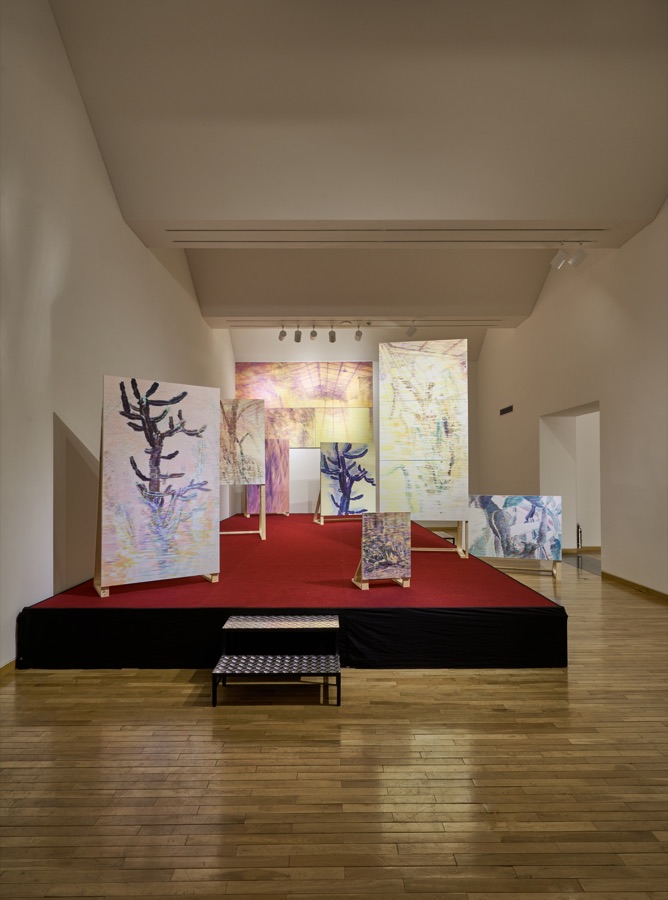
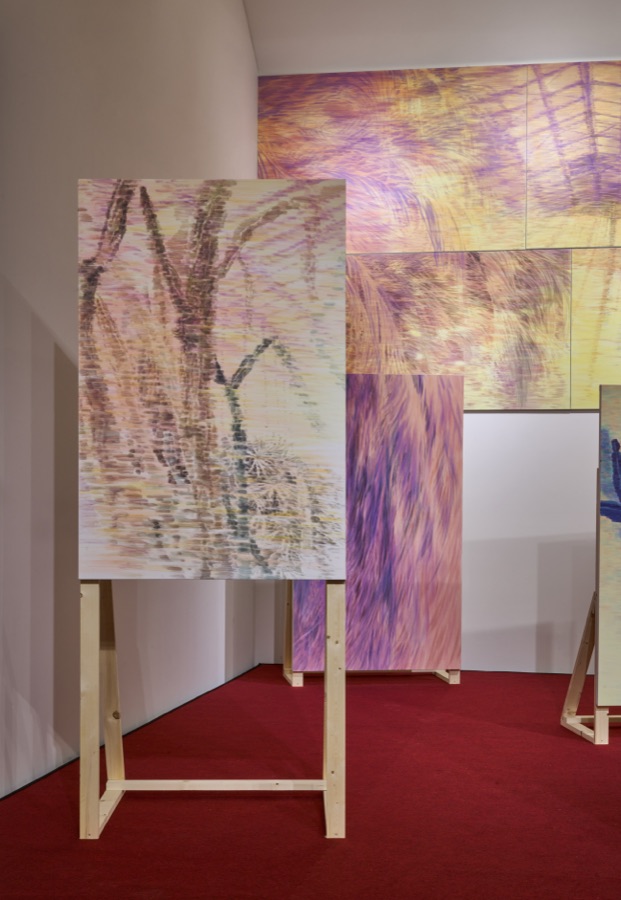
2023년 가을 개최된 최가영의 개인전 제목은 《후르츠》(갤러리조선, 서울, 2023)다. 직설적으로 후르츠라니. 과일도 프룻(Fruit)도 아닌, 후르츠라면 제일 먼저 연상되는 건 후르츠칵테일이다. 80년대 병문안의 상징. 단물에 담겨 있는 파인애플, 체리를 제외하고선 사실 과일 각각의 이름도 몰랐었다. 찾아보니 파파야, 코코넛 젤리 등이 들어있다고 한다. 요즘이야 제철 과일에다가 유기농을 찾지만, 열대과일이야말로 이국 취향 저격에 적합하지 않았던가. 부곡하와이, 세르비아 채석장, 후르츠로 이어지는 최가영의 연대기는 이처럼 이국 취향이란 표현에 적격이다. 그러나 그녀는 따뜻한 나라 휴양지에서 환상적인 안식에 취하기를 허하지 않고서 삐딱선을 탄다. 이국 취향의 행복감에 젖도록 허하지 않고 끝내 불편하게 말이다. 실제로 《후르츠》에 등장하는 과일들은 열대과일이라고 하기엔 석연치 않다. 트로피컬(Tropical) 맛이라고 소개하는 명명도 성분을 낱낱이 따져보면 열대와는 전혀 상관없는 곳들에서 비롯한다고 한다. 하와이안 피자의 주된 토핑인 파인애플 또한 미국 자본이 하와이에 진입하면서 재배하게 된 과일로써, 오히려 하와이 왕국을 무너뜨린 산물이라는 것이다. 그렇다면 정물화처럼 진열된 《후르츠》에서 늘어놓은 과일들은 그녀에게 어떤 의미인가. 최가영은 이를 자본이 투입되어 인위적으로 조장된 산업 환경에서 이 과일들이 각자도생하는 가운데 조성된 과일에 대한 현대식 사군자로 간주한다. 사군자라면 동양화과 출신으로서 매난국죽의 상징을 모를 리 없다. 그러나 사군자의 덕목이 동시대상과 거리가 있기에 동시대의 면면을 비출 새로운 제재가 요청되기 마련이다. 특히 《후르츠》의 과일들 중 용과는 화려한 외양에 비해 속내는 은은한 단맛이 있다. 최가영은 이같은 측면으로부터 외양과 내면의 불일치를 포착해 냈다. 몬스테라의 경우 실내 장식을 위해 이용되다 보니 이식된 장소에서의 생존을 발휘해 진화한 외양이 핵심이다. 그녀가 이입하는 지점은 환경과의 불일치 속에서도 생존술을 발휘해야 하는 과일들과 인간의 조건이 지닌 동질감이다. 이 과정에서 작가의 시선이 염세적인지 혹은 냉각화된 관점인지 물었을 때 답변은 단순했다. 그녀는 “귀엽게 보는 편”이라고 응수하는데 연민과 이입, 못마땅함이 혼재된 복잡한 마음이 기저에 깔려 인간의 비인간적인 면모를 추출하고 반대로 비인간의 인간적인 면모 또한 역전해서 생각해 볼 과제로 남긴다. 하와이로부터, 세르비아 거쳐, 후르츠까지 “사람 없지만 사람이 중요한 그림”, 그녀를 수식하는 이 지대가 설득력 있게 다가온다.
이국 취향의 정체
그렇다면 외양에서는 이국 취향이 전면화되고 있지만 이국 취향을 내세우면서 배격하는, 이 꼬여 있음의 이유는 무엇일까. 거리감을 확보한 후에야 도입될 수 있는 최가영의 주제 의식이 무엇인가 묻지 않을 수 없었다. 그녀는 후르츠를 빗대어 “멀리서 온 이방인”이란 표현을 썼다. 동어반복적인 반성의 관성을 벗어나기 위한 거리 설정이 습관이 되었다는 말에 설득당했다. 비판철학이 지닌, 외연에서부터의 인식의 재구성을 내면화한 반성적 사고는 낭만과 이상화를 재고하게 만든다. 부곡하와이처럼 쇠락해서 지나간 여흥의 문물을 흘려버리지 않고 되잡기, 산수화를 대체할 현대의 풍경화가 사생 아닌 모니터 속 픽셀로 재구성되는 회화적 관습 비틀기, 정물에 반영되는 제국주의와 자본주의의 생산과 소비의 세태에 대한 문제 제기. 이들 각각은 피부에 닿지 않음에도 감각하고 있다는 착시와 오인의 부산물을 문제시한다. 최가영은 환상과 이상화가 인간 비인간 모두의 반쪽짜리 생존술임을 주제적 측면에서 일관성 있게 지적하면서도 화가로서의 회화적 과제는 완수와 과제 재설정의 연결고리를 지어가며 나아가고 있다. 회화 이미지가 전하는 직접적인 감각으로 인해 개인전마다 그녀의 주제가 선명하게 전달되고 있는가에 대해서는 고민이 들기도 하지만 중첩되어가면서 연이은 화가로서의 과업 수립에 대해서 기대하는 바가 크다. 예컨대 최가영은 화가지만, 내겐 영화감독처럼 다가오는 면모가 있다. 전시마다 단락이 설정되는 게 아니라 연결된 세계관 아래 하나의 전시에서는 흘러가는 단적인 장면이나 대상일지라도 예리한 시선에 의해 줌 인(zoom-in) 되고 이로부터 스핀오프(spin-off)가 발생하는 연속성이 그녀만의 저력이지 않을까. 이국 취향의 정체(正體)는 심장의 수축과 이완이 그러하듯 살아있는 한 움직임을 지닌다. 정체(停滯) 아닌 방식으로 나아간다.
김현주는 예술의 선물과 증여 가치에 대해 고민한다. 정체성을 폐업 큐레이터에 두고 있고, 일이 있을 때만 잠깐씩 전시를 만들고 글을 쓴다. 사회적 쟁점, 사회적 소수자의 문제에 예술로 개입하고자 하며, 정주보다는 유목적 활동에 관심을 갖는다.
I call for each star Pae, Kyeong, Ok, such foreign girls’ names, ...... names of poets like ‘Francis JAMMES,’ Rainer Maria RILKE’
In YUN Dongju’s “A Night of Counting Stars,” he categorizes the names of exotic girls and poets as Pae (佩), Kyeong (鏡), Ok (玉), and includes figures like Francis JAMMES and Rainer Maria RILKE. However, during my childhood, all these names carried a sense of the exotic. The emotional gap conveyed by the term “exotic” surpassed that associated with a foreign country. Exotic taste is composed not only of physical distance but also of the yearning arising from unfamiliarity. In reality, the actual physical distance is inconsequential. What holds more significance is the kind of identity or crystallization that these blended tastes possess.
From Hawaii to Serbia to Furutsu
CHOI Kayoung’s journey spans from Serbia to Hawaii and eventually Furutsu. However, for the purpose of this essay, I will trace the narrative in reverse chronological order—from Hawaii to Serbia and, finally, to Furutsu. This sequence mirrors the order I was introduced to CHOI.
From Hawaii
The Yongin Natural Farm, established in Gyeonggi Province in 1976, underwent a transformation in 1996, rebranding itself as Everland. The theme park, situated on the same grounds, underwent a reorganization aimed at “Creating the infinite value of time and space to improve the quality of life.” While Everland ascended as a haven of dreams and aspirations, Bugok Hawaii in Changnyeong-gun, Gyeongnam, inaugurated in 1979 as a belated counterpart to the natural farm, experienced a decline post-1990s, culminating in its closure in 2017. This sets the backdrop for the discussion of CHOI’s exhibition Survival in Fantasy. Survival in Fantasy was CHOI’s solo exhibition at the The Kumho Museum of Art in 2022, a showcase that left a profound impact on me when I happened upon it by chance. As a child hailing from Bugok Hawaii, delving into the 99 chapters of Ninety-nine Pieces of Bugok Hawaii - From J in 1984 (2022) transported me back to the enchanting days of watching dancers perform on a stage filled with exotic allure. These memories, ignited by a postcard of J (Jacky) discovered by CHOI on eBay, unveiled the vividly colorful and glamorous stage adorned with various tropical plants, people adorned in vibrant swimsuits beside swirling lukewarm water, and an exceptionally long water slide, evoking a profound sense of nostalgia. The work took the form of a lenticular arrangement, presenting shimmering images at intervals against a white background that served as a gap in the memory, echoing those days when reality seamlessly intertwined with the imagined. While CHOI’s paintings evoked concrete experiences, for her, the imaginary realms were constructed through J’s postcards and low-quality home videos of Bugok Hawaii. She expressed, “I felt that the gap in my imagination would never be filled, even though the thickness of the imagination seemed to be building up like this...” The exotic allure sparked by J was once again brought to the forefront, yet instead of people from that era, including J whom she had never met, tropical plants assumed their place. Despite the slight time lag that separated CHOI from Bugok Hawaii, an interview with the remnants of Bugok Hawaii was structured to bridge the gaps in her memory embedded behind the paintings.
Through Serbia
There is also something to be said for CHOI’s solo exhibition A Serbian Mountain, a Quarry, Venčac at Art Space Hyung in 2020. Serbia is more like a foreign country than France, Germany, or England. I was speechless when I saw CHOI’s A Serbian Mountain, a Quarry, Venčac, which depicts the Benzas quarry in Serbia. If Bugok Hawaii draws a line in the sand between me and CHOI, Serbia draws a line in the sand between me and anyone else who has ever been there. I wouldn’t call it a unique experience, but there was a time when I was invited to a wedding in a small town in southern Serbia and danced a dance that looked like something out of an Emir KUSTURICA movie. CHOI, who is the subject of A Serbian Mountain, a Quarry, Venčac, had never been there. Rather, this exhibition led to an exhibition in Serbia in the fall of 2023. The idea for the exhibition was to receive local photographs from Serbian artist M (Maria) and paint them with the idea of walking and exploring the mountains in the photographs. However, she was shocked when she later realized that the landscape in the photo was a quarry. “I felt like the mountain was crumbling,” CHOI said. Perhaps this realization led to different preparations for the postwar exhibition. Regardless of whether it was a mountain or a quarry, the conditions for viewing and composing the transmitted image on a monitor were the same. While they may have had tremendous texture and color in the field, the pixelated landscapes appeared as paintings with “flattened surfaces” that made the foreground and background of the space appear closer together than they actually were. For this expression, she decided to try acrylic on canvas instead of hanji. Of course, the change has its own meaning, but CHOI seems to have focused on the desired expression rather than the change. For her, the tools of painting, such as support, pigment, and brushes, do not accompany her to rethink efficiency. The basic concepts of Oriental painting are still important to her. Therefore, in her paintings, strokes are definitely more prominent than surfaces. The sense of movement and speed through handwriting is a constant challenge for her, even with acrylics on canvas, and she makes flexible choices when necessary to find the right expression for the landscape she has not experienced. The surface of the paintings boldly reveals the omissions, fragmentation, juxtapositions, and combinations she chose to make in the process of taking in the discontinuous landscape, as the fictional landscape was altered in a way that could reveal its fictional nature. After the exhibition in Serbia, I received from her a few archival photographs of the place she had approached for the first time physically and for the second time conceptually. It will be interesting to see what these unfinished fragments of a foreign country will provide for CHOI in the future.
To Furutsu
CHOI Kayoung’s solo exhibition in the fall of 2023, titled Furutsu (Gallery Chosun, Seoul, 2023), conjures images of canned fruit cocktail, a symbol of 80s hospital visits. Aside from the pineapple and cherry in the honeydew, I didn’t even know the names of the individual fruits. When I looked it up, I found out that it contains papaya, coconut jelly, etc. Unlike the trend of seeking seasonal and organic fruits today, tropical fruits are the best for savoring exotic tastes. CHOI’s chronicle of Hawaii, Serbian quarries, and furutsu is a perfect example of embodying exoticism. However, rather than basking in the euphoria of exoticism, she brings forth discomfort. The fruits featured in Furutsu are not truly tropical, and even the flavors labeled as “tropical” originate from places unrelated to the tropics upon closer examination of the ingredients. Pineapple, a central element of Hawaiian pizza, was introduced to Hawaii with American capitalism and represents the cause of the Hawaiian kingdom’s collapse.
If that’s the case, what does the array of fruits displayed in Furutsu, arranged like still life paintings, mean to her? CHOI Kayoung considers these fruits as contemporary still lifes, each coexisting in an environment artificially stimulated by capital. As a trained Oriental painter, CHOI is undoubtedly familiar with the symbolism of the Four Gentlemen – plum, orchid, bamboo, and chrysanthemum. However, given that the virtues of the Four Gentlemen are distant from contemporary concerns, new perspectives are often required to shed light on contemporary issues. Among the fruits in Furutsu, the dragon fruit, despite its vibrant appearance, possesses a subtle sweetness. CHOI skillfully captures the disparity between external and internal qualities. For the monstera, its aesthetic appeal as an interior decoration contrasts with its evolution to adapt and survive in a transplanted environment. Her exploration delves into the homogeneity between fruits and the human condition, emphasizing the necessity for survival skills in the face of environmental discrepancies. When asked if her perspective on this process is pessimistic or cynical, CHOI simplifies it by saying, “I tend to look at them as cute.” However, beneath this simplicity lies her complex feelings of compassion, understanding, and disgust, revealing the inhumanity of humans while challenging viewers to contemplate humanity within non-human entities. From Hawaii to Serbia to Furutsu, where “there are no people in the picture, but people are important,” CHOI’s formulated artistic space is convincingly thought-provoking.
The Statis/Stagnation of the Exotic Taste
Why, then, is there this twist, where exotic tastes take center stage externally but are ostracized internally? I couldn’t help but ask what is CHOI’s consciousness which can only be introduced after securing distance. She used the expression “stranger from afar” in reference to Furutsu. I was convinced by her assertion that maintaining a distance had become a habit to break free from the inertia of repetitive reflection. Reflective thinking, inherent to critical philosophy, involves internalizing the reconstruction of perception from external sources, prompting us to reconsider romanticization and idealization. Choosing to reclaim a deteriorating artifact of entertainment like Bugok Hawaii instead of letting it fade away, altering painterly conventions as modern landscape painting transforms into pixels on a monitor instead of a portrayal of life, and questioning the systems of production and consumption rooted in imperialism and capitalism as reflected in still life—all these endeavors address the byproducts of illusion and misperception. They highlight the illusion that we are sensing something even when it doesn’t physically touch our skin. While CHOI consistently emphasizes that illusion and idealization are half-hearted survival techniques for both humans and non-humans, her painterly task, as an artist, is one of completion and resetting. Despite occasional concerns about whether her themes are clearly conveyed in each solo exhibition due to the direct sensation conveyed by her painted images, I have high expectations for the overlapping and successive establishment of her tasks as a painter. CHOI, to me, resembles more of a filmmaker than just a painter. The continuity in her work, where even a single scene or object from one exhibition becomes the focal point of a connected worldview, exhibits her strength. The stasis of exoticism carries a living movement, much like the contraction and relaxation of the heart, moving forward in a way that avoids stagnation.
Hyunju KIM contemplates the gift value of art as an alternative to the commercialization of art. She intends to intervene as an art in social issues and problems of social minorities, and is more interested in nomadic activities than settlement.