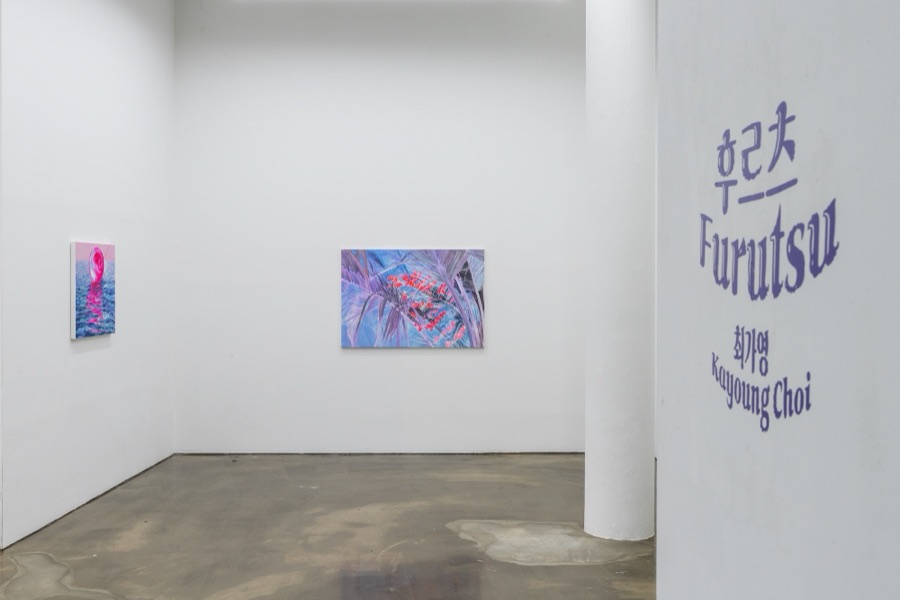
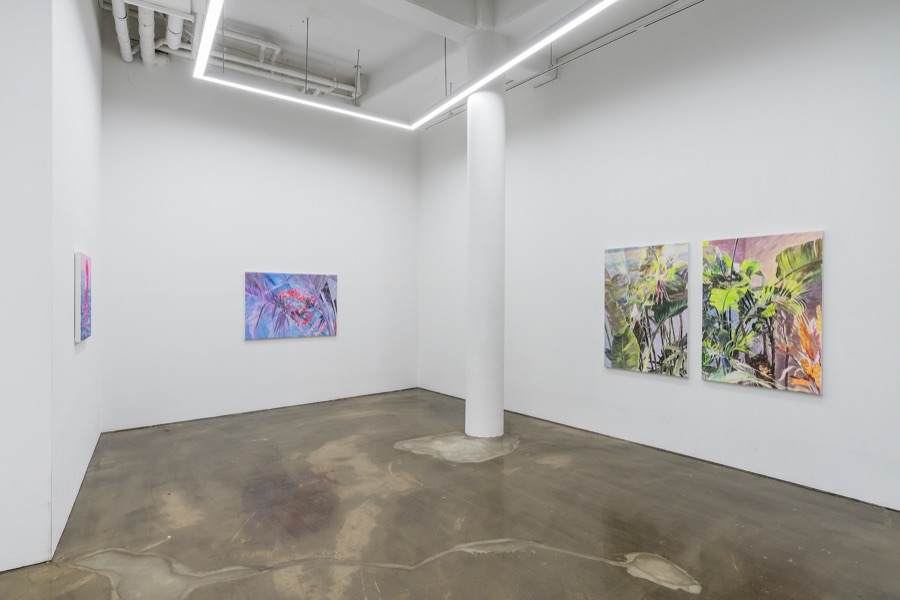
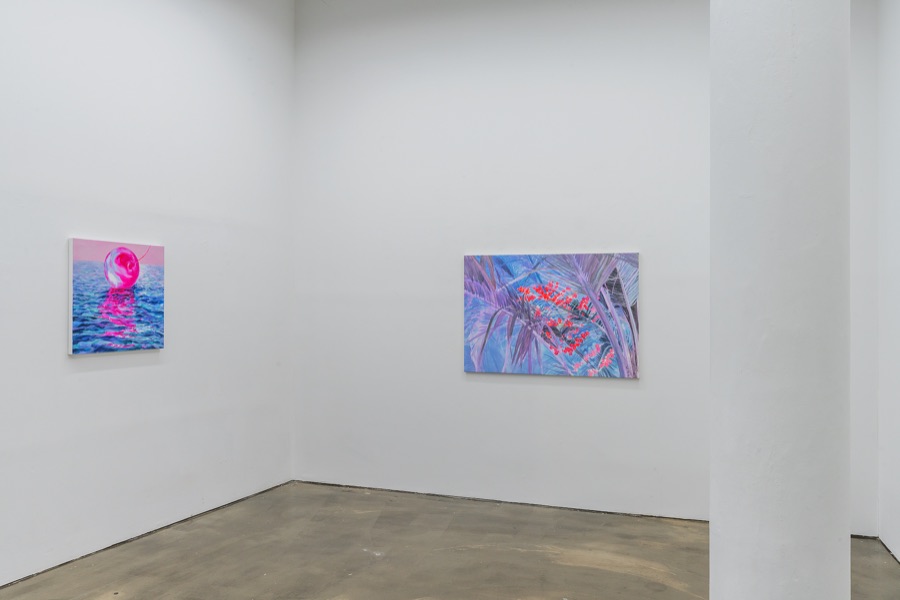
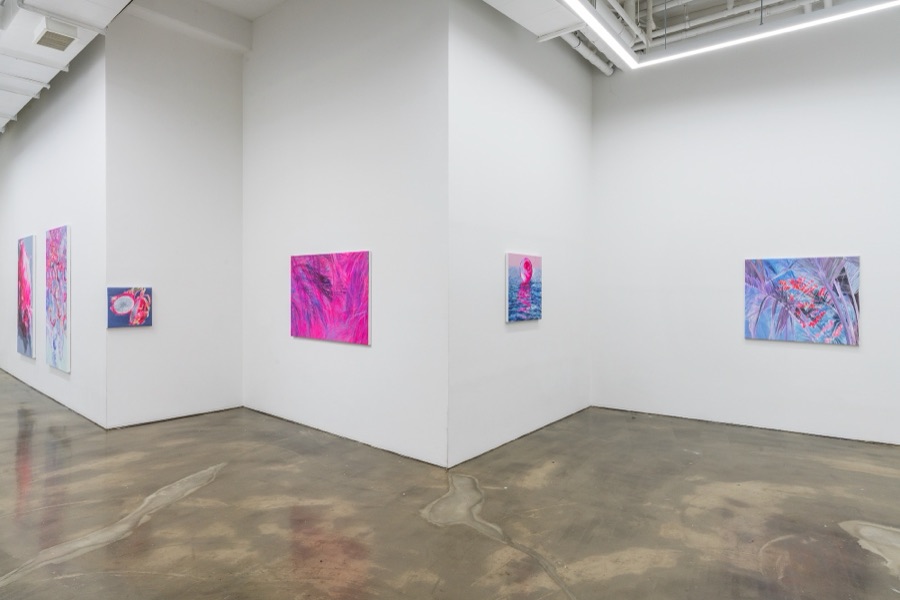
최가영 Kayoung Choi여행가영 예술 연구 관광 안내소Travel Kayoung — Art Research Tourist Information

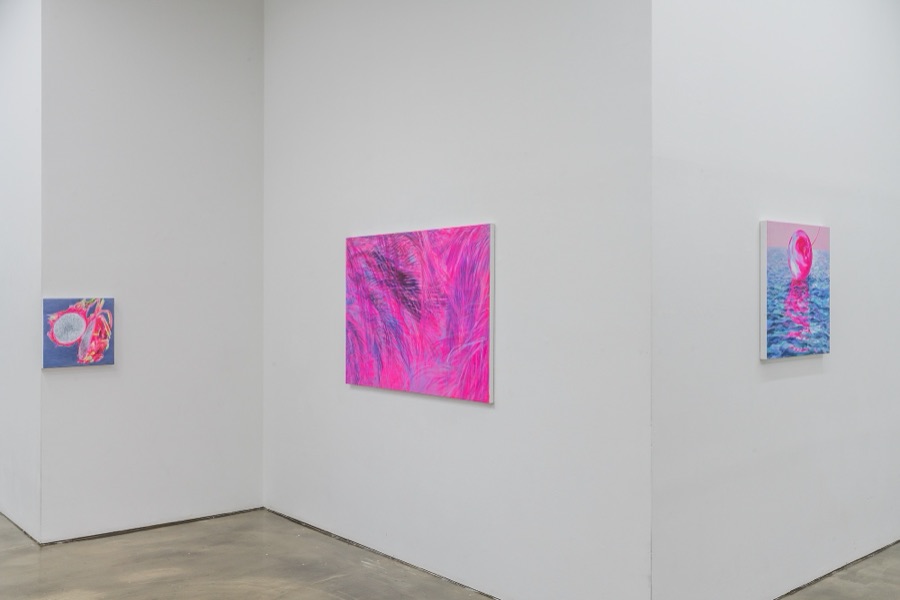
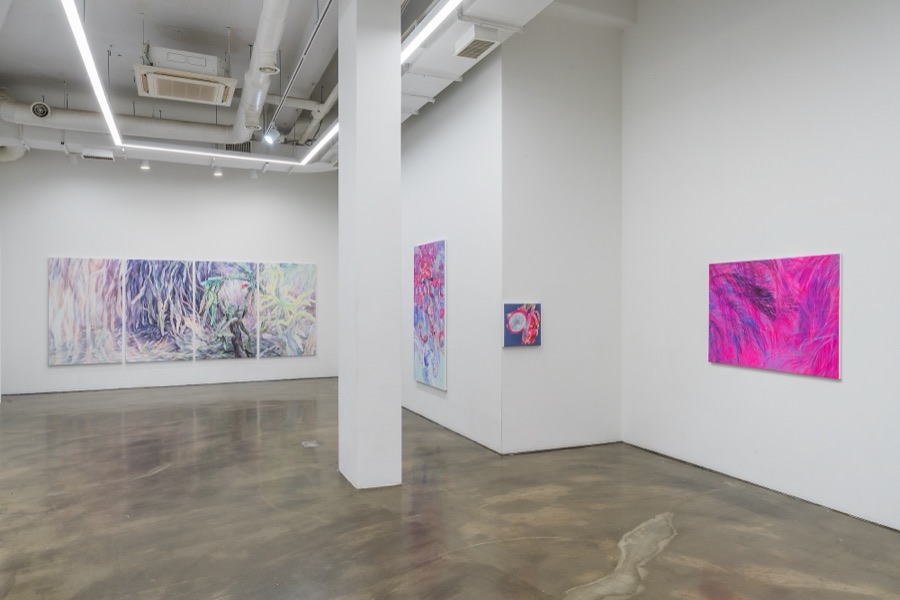
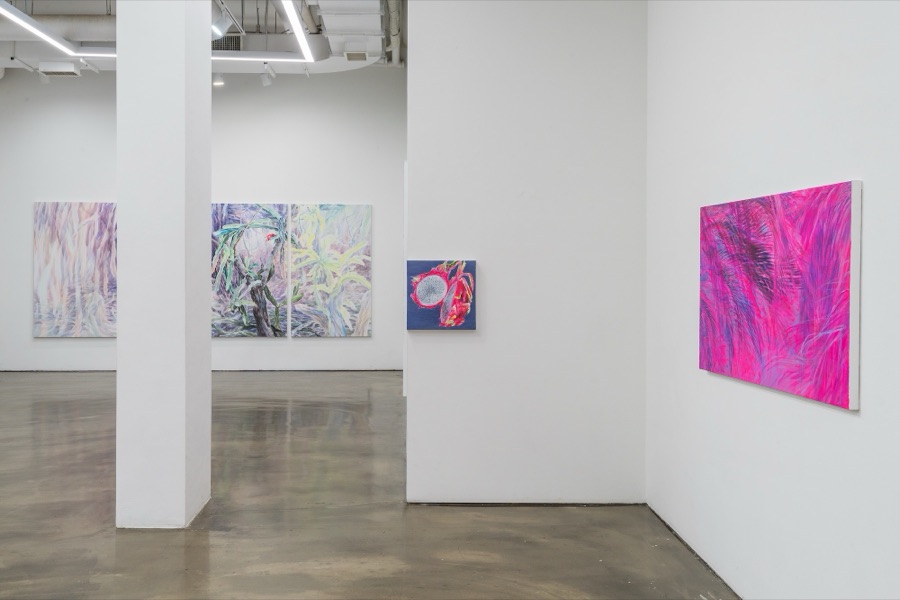
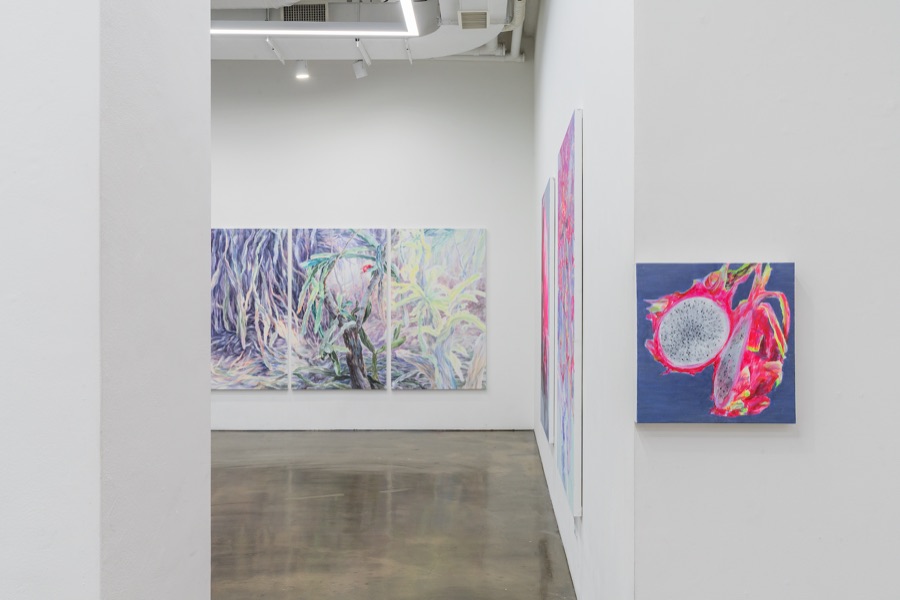
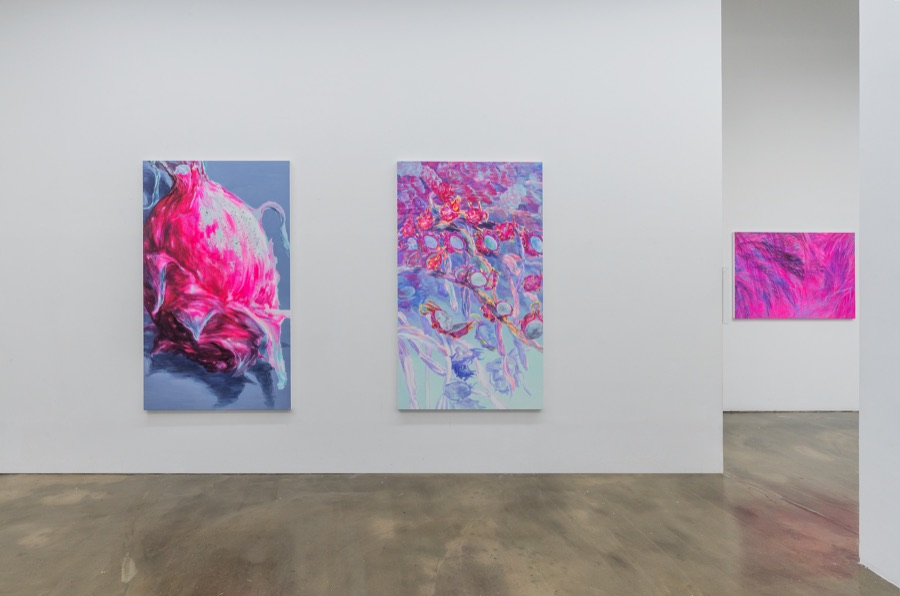
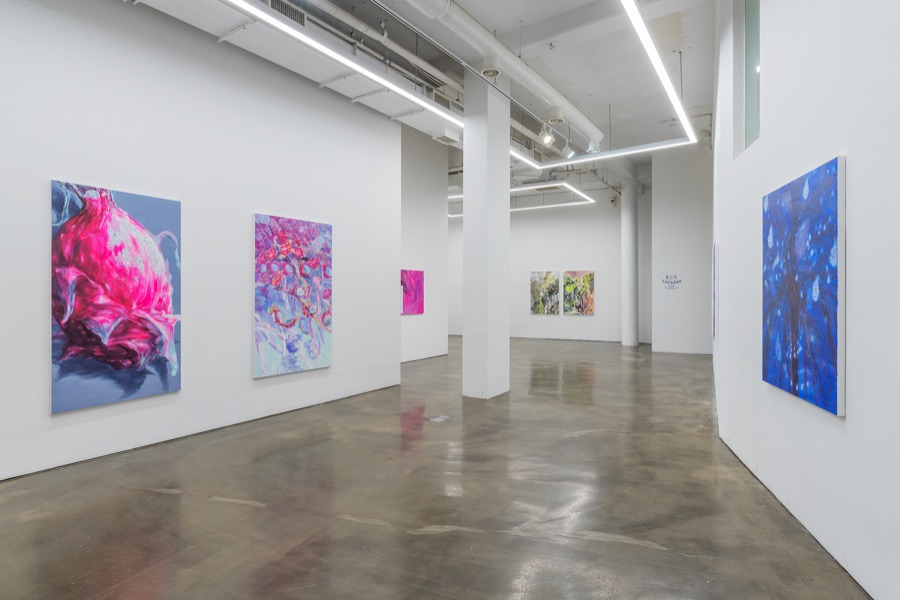
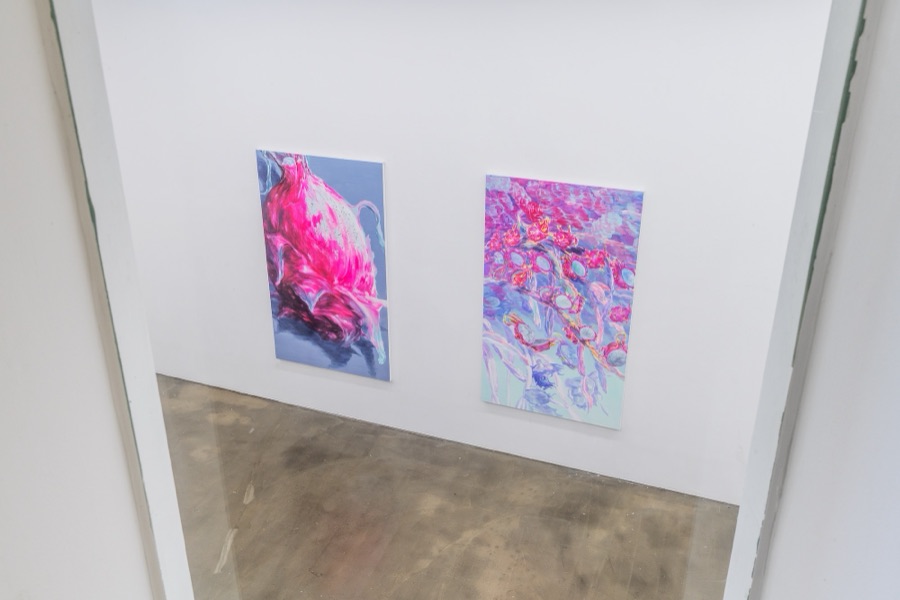
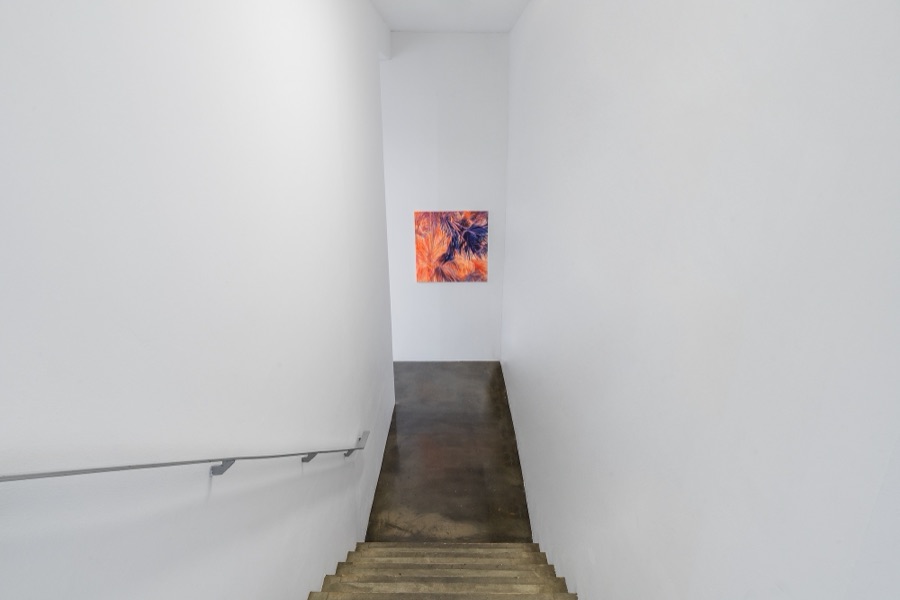
전시 전경Installation Views

글Text

작가노트Artist Note

최가영Kayoung Choi

그는 어두운 밤에 태어났다. 그래서 달의 여신 셀레네를 따라 이름을 붙였다고 한다. 모두가 잠든 밤에도 활짝 피는 꽃처럼 그 렇게 살아가라고. 하지만 그는 태양을 닮고 싶었다. 활활 타오르는 듯한 눈부신 빛을 동경했기 때문이다. 무한히 내리쬐는 뜨 거운 볕 아래서 그는 언제나 태양에 조금 더 가까이 닿기를 바랐다. 바람은 곧 질문이 되어 그를 추궁했다. ʻ땅에 발붙인 나는 왜 저 하늘 위를 동경할까’ 또렷한 저 불덩이처럼 선명하게 색을 내는 존재가 되기를, 한낮에 모두를 빠짐없이 비추어 키우는 그 넓은 품을 배운 이가 되 기를 소망하며 그는 하루하루를 뜨겁게 춤췄다. 이따금 찾아오는 단비 같은 행운을 그는 허투루 흘려보내지 않았다. 지치고 힘 든 날에 한 번 더 손을 뻗어 쥐어지는 것들을 차곡차곡 그의 안에 쌓았고, 목이 타는 갈증에도 스스로를 더욱 여몄다. 알아차리 지 못할 정도로 아주 작고 느린 변화일지라도, 그는 매일의 움직임을 연습하면서 일상이라는 공연을 이어갔다. 그래도 혼자서는 도저히 해결할 수 없는 것들이 있었다. 서로를 붙들고 기대고 의지하며 조금씩 더 올라 고개를 들었다. 그의 이번 생에 꿈꿔온 태양 같은 단 하나의 아름다운 열매를 맺기 위해

ʻ아직이야. 나는 좀 더 무르익을 수 있어. 일생 동안 바라온 나의 하이라이트를 나는 마냥 기다려온 것이 아니야. 하루하루 치열하게 살아내고 견디며 지켜왔다고.’ 사실 그는 알고는 있었다. 바라고 상상해온 자신에 비로소 가까워지는 시점을 스스로 택할 수가 없고, 어쩌면 거의 가까워서 너무나 아쉬운 바로 이때 무대 위에 오를지도 모른다는 것을. 저 먼바다 건너 한국이라는 땅에 도착하기까지 서류와 절차를 통 해 그는 자신이 무해한 이방인임을 밝혀야 했다. 그는 이방인이었다. 아니, 이방인이어야 했다. 그의 역할은 그가 저 먼 곳으로 부터 왔음이 분명할 때 비로소 윤곽이 드러났고 그렇기에 그의 용모와 정체성은 이국적인 것으로 초점이 맞춰졌다. 어느 더운 나라에서 온 것 같은 야자수 잎사귀들에 노을을 닮은 조명이 비치고 그는 그의 역할을 시작했다. 풋내 가득한 성장 기록을 덮고 그는 이제 달큰한 이름표를 단다. 끈적한 설탕물 같은 낭만에 몸을 담그고 그의 이름을 따온 여신이 사랑한 연인 처럼 영원히 잠들어서 죽지도, 늙지도 않을 것이다.

2023년 11월에, 최가영

She was born on a pitch-dark night. That is why she was named after Selene, the goddess of the moon, so she would live like a flower that blooms brilliantly even at night when all are sound asleep. Yet, she wanted to be like the sun because she admired the glaring light that looked like a blaze of fire. Under the scorching heat that never seemed to wane, she always wanted to reach closer to the sun. Her hope soon turned into a question and pressed her: “Why do I, standing on this earth, yearn for the skies?”

She passionately danced away every day, longing to become one that shines brightly and clearly like the glaring mass, wishing to take after the generosity of the sun that extends its light to every living thing, nurturing them. When luck came her away time to time like a welcome rain, she did not let it pass in vain. On tough and tiring days, she stretched her hand once more to grasp what came in her hand, collecting them one by one, and she braced herself even when she was parched with thirst. Though the change was so slight and slow that it was barely noticeable, she practiced the movement of everyday, relentlessly keeping on with the performance called everyday life.

Nevertheless, there were things that she just could not do alone. She held on to the other, and as they relied and depended on each other, they slowly made their way up and lifted their heads. It was all for the sake of a single, beautiful fruit like the sun that she had been dreaming of all her life.

‘No, not yet. I can ripen a bit more. I have not been just simply waiting for the highlight of my life that I have been dreaming of all life long—I fiercely fought for it every day, trying to guard it and save it.’ In fact, she knew already. She knew that she cannot choose the time when she will step close to the self she had been imagining and yearning to be, that she may have to go on stage right then and now, when it’s a shame because it is so close. Until she set her foot on Korea, a land so far away across the waters, she had to prove that she is a harmless foreigner through all kinds of documents and processes. She was a foreigner. In fact, she had to be one. Her role became clear only when it was evident that she came from afar, so the focus of her look and identity had to be on exoticness.

Light glowing like the setting sun was cast on palm leaves that seemed to have come from some tropical country, and she did what she had to do. The days of growing and blossoming are now the past and she now goes by the name with a sweet nuance. She will drench herself in romance that feels like sticky and syrupy sugar water and fall into eternal sleep like the lover of the goddess whom she was named after, neither dying nor growing old.

November 2023 Kayoung Choi

서문 「마젠타, 선셋」Foreword

이연지Yeonji Lee

어떤 스타일의 장소든 간에 실내 곳곳을 빠짐없이 차지한 바다 건너온 이국의 존재들이 있다. 동양란의 청초하고 우아한 맛은 없을지언정 시원스럽고 화려한 생김새가 매력인 알로카시아, 몬스테라 같은 열대 식물 말이다. 이들의 터전이 토양에서 화분으로 바뀌자 주변에도 변화가 생겼다. 시장 골목처럼 난데없는 곳에서도 인도네시아나 방콕에서 볼 법한 풍경을 가까이서 누릴 수 있게 됐다는 것.

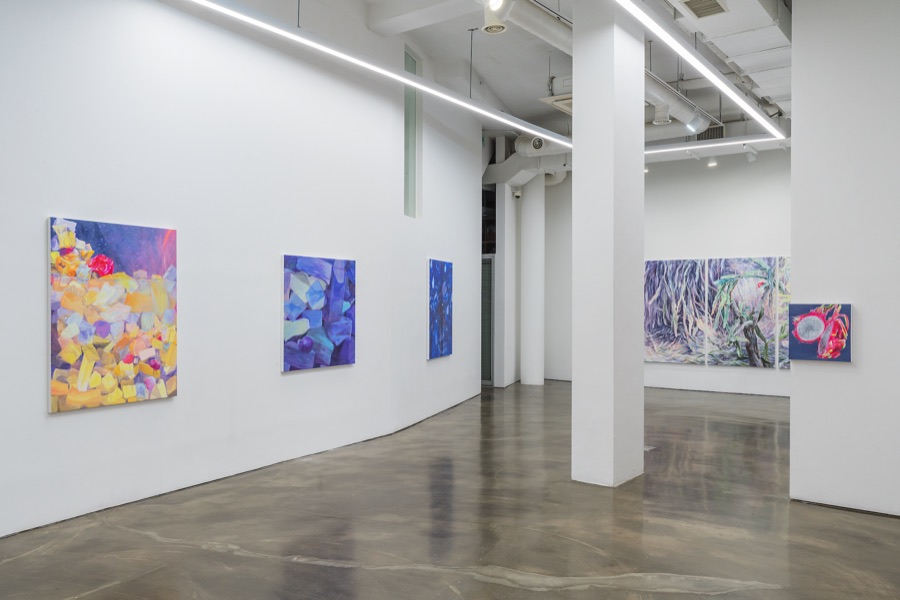
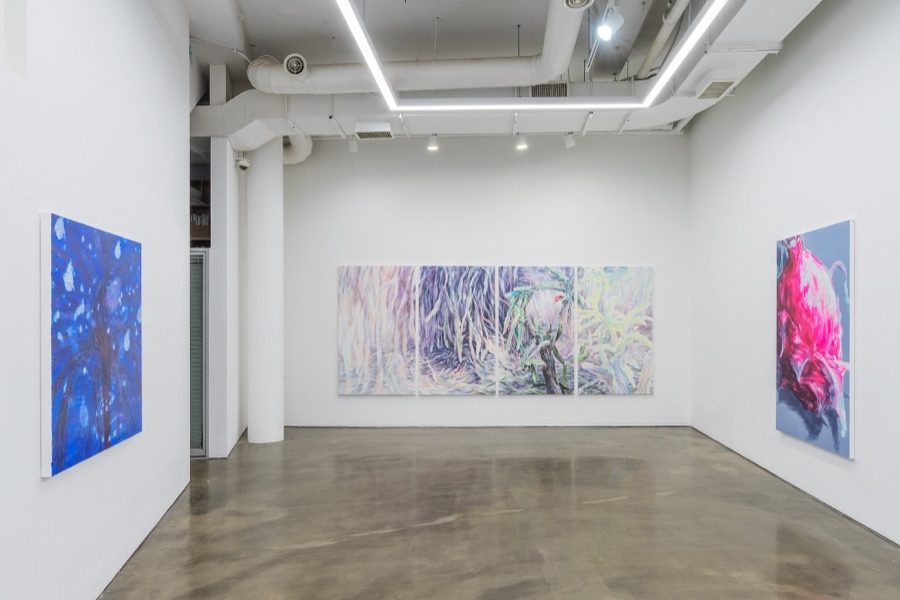
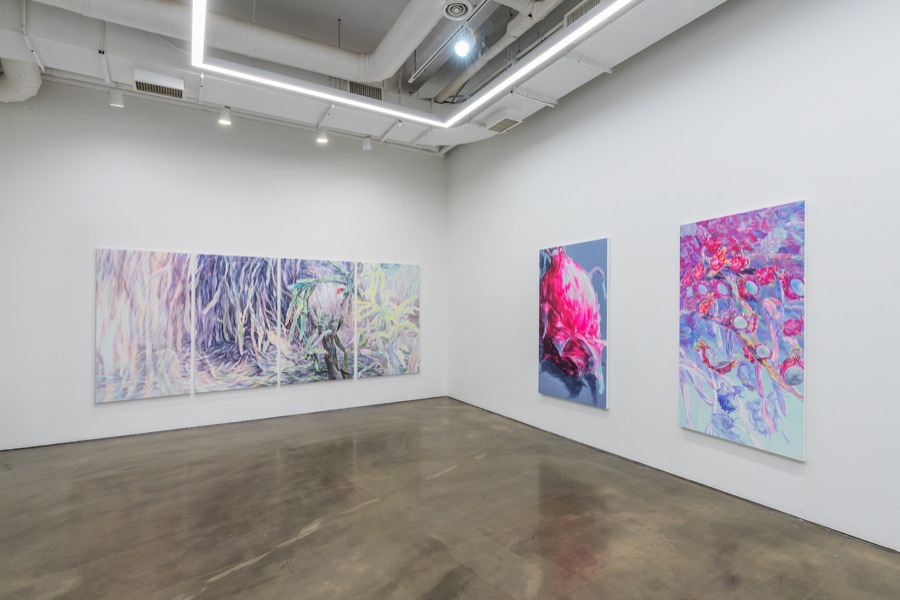
실물과 달라도 어떤가? 그저 원하는 순간에 적당히 보고 즐길 수 있으면 그걸로도 충분한데. 하와이풍 카페도 ‘하와이섬’ 말고 ‘트로피컬’한 느낌만 살리면 된다. 흙이며 풀 한 포기 하나 없는 소격동 지하 전시장에 최가영이 용과나 야자수 같은 열대 식물로 연출한 장면들도 그렇다. 최가영의 그림을 따라 그가 구사하는 트로피컬한 맛을 느껴본다. 이건 모두가 잘 아는 달콤하고 싱그러운 이국의 맛인 게 분명할 것이다. 전시장 한쪽 벽에는 유명 해외 휴양지 섬을, 다른 벽에는 전시장 인근 도로에 즐비한 은행나무 대신 노을진 해변가에 야자수가 늘어선 모습을 눈앞에 그린다. 천장에 달린 직사각 모양의 조명 말고 태양 아래 싱그럽게 빛나는 열대 자연이 있다고도 상상해본다. 탐스럽게 맺힌 빨간 열매와 달콤한 풍미를 뽐내듯 과육을 드러낸 용과를 보며 신선한 과육을 떠올려도 보고. 그런데 시종일관 싱그럽고 정열적인 익숙한 풍미 사이로 시야에 잡히는 장면이 있다. 숲속에 홀로 맺힌 용과 하나(<단 하나의 열매를 위하여>). 주변이 희뿌옇고 메말라 보여서 유독 붉고 싱싱한 이것은 트로피컬한 ‘무엇’보다 추운 겨울 피어나는 ‘한란(寒蘭)’을 닮았다. 탐스럽고 달콤한 과육을 연신 드러내기 바빴던 직전과 달리 이 용과가 시련을 견뎌내며 얻은 결실처럼 보인다면 다음은 이 트로피컬 맛 낭만에 현실을 불러올 차례다.

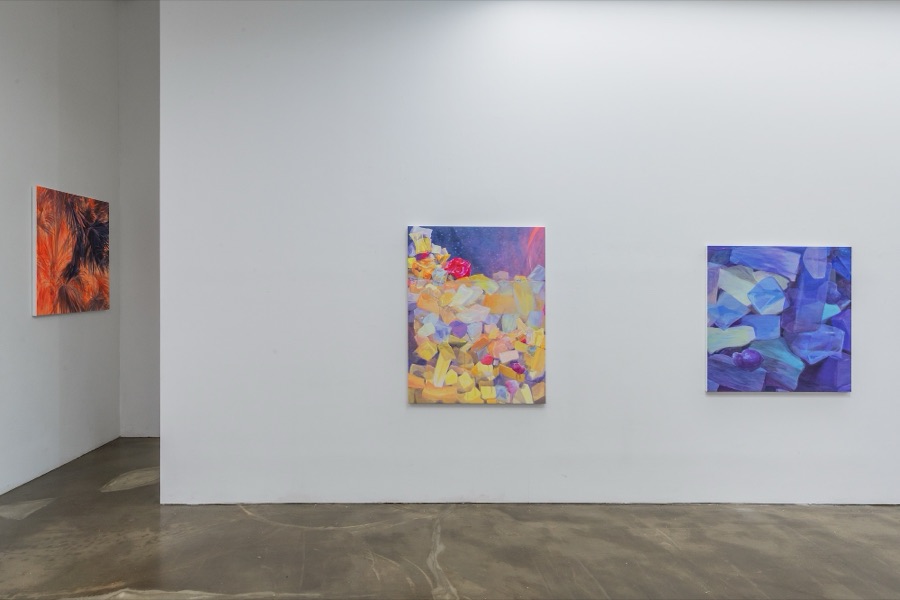
열매 하나 맺으려고 메말라 버린 숲으로 뜨거운 인공 바람에 색 빠진 가지를 흔들거리는 아레카야자를 겹쳐 본다. 그 다음 <드래곤 후르츠 펀치>의 야자수는 노을 분위기를 흉내 내는 RGB 선셋 무드등 불빛에 시달려 녹음을 여윈 검게 탄 모습으로 바뀐다. 야자수를 비춘 선셋 무드등의 마젠타 불빛은 <블루 하와이>의 고채도 야자수 열매를 향한다. 새빨간 열매에서 멈춘 시선이 설탕 시럽에 잠긴 과육 조각 중 유독 크고 도드라진 절임 체리(<엔디미온>)를 클로즈업 하면서 다음의 문장이 떠오른다. ‘저 색감은 꼭 야자수 열매를 닮았어.’ 그림 속 야자수 열매를 보고 있으면 신선한 과육보다 씹을수록 달콤한 시럽 맛만 남기는 절임 체리의 그 맛이 내 입에서 나는 것도 같다. 껍질 벗겨진 용과의 과육은 과즙 한 방울 없고, 과즙 같은 축축함을 찾는 눈앞엔 통조림 과육을 재워둔 설탕 시럽만 보일 뿐이다. 야자수 열매와 통조림 체리 사이, 신선한 풍미를 찾아 헤매던 두 눈이 검푸른 장면(<영원한 잠>)에 이르자 야자수의 낭만과 달콤함은 한 발 더 뒤로 물러선다.

이야기는 다시 메마른 숲으로 돌아간다. 눈앞의 열대 식물들이 우리가 익히 상상한 모습과 다르게 결코 낭만적이거나 달콤하지도 않은 생의 고군분투를 겪어 왔다는 걸 짐작게 하는 숲속의 용과. 열대 식물들은 이제껏 서로 다른 외형으로, 심지어 사막 출신이어도 똑같은 열대 맛 낭만을 만들어왔다. 맛도 외형도 다른 파인애플과 파파야가 통조림 안에선 똑같은 시럽 맛을 내듯이 말이다. 최가영이 보여주는 트로피컬한 낭만 속에서 열대 식물은 후르츠 칵테일의 과일 조각에 불과했다.¹ 최가영의 시선은 줄곧 블루 하와이²의 파인애플 향 파라다이스가 아니라 이리저리 움직이는 화분 안쪽, 야자수의 간이 터전을 향했다. 야자수는 이 화분으로 어디로든 갈 수 있지만 화분이 놓이는 자리는 그들이 원하는 곳은 아닐 터. 실내에서 인공 바람과 무드등 불빛을 맞으며 시들어 가야 하는데 이곳이 과연 열대 우림보다 괜찮은 터전이라 할 수 있을까. 그런 시선을 안고 붓끝으로 쌓아 올린 열매의 채도는 절임 체리맛을 닮아갔으며, 실내의 야자수도 그에게는 빛 공해에 시달리며 열대 섬의 낭만을 연기하는 피로도 높은 모습으로 비쳐질 수밖에 없었다. 하지만 그런 안타까운 시선으로만 이들을 그렸다고 하기엔 그의 열대 식물은 시들거나 썩어서 물러터진 구석 하나 보여주질 않는다. 거기다 고채도의 화려한 자태로 가장 트로피컬한 순간만을 내비치는 게 꼭 무대 위에서 무용수가 열연하는 모습을 닮았다. 어쩌면 최가영이 만든 이 달콤한 이야기의 화자는 삼인칭이 아니라 처음부터 일인칭의 누군가였을 수도 있다. 우리가 놓친 것이 무엇인지 떠올려야 할 때다. 다시 검푸른 화면 앞으로 향한다(<영원한 잠>). 눈앞의 이 과육들이 지금껏 우리와 눈을 맞추고 있었다고 상상해 본다. 그렇다면 어떤 지상낙원도 불러오지 못한 이곳의 이야기는 어떻게 다시 시작할까.

첫 장면은 카페 실내를 천천히 훑는 알로카시아의 시점에서 출발할 것이다. 야자수 열매는 가공된 맛으로부터 그들의 달콤한 생존 전략³이 실패했다 믿었다. 이제 이들은 진화보다 쉬운 생존 전술을 펼치는 모습으로 바뀐다. 더는 진화하지 않아도 되는 지금 모습 그대로 트로피컬한 맛을 흉내 내는 건 전혀 어렵지 않다. 그저 설탕 시럽과 RGB 조명에 물들기만 하면 된다. 역으로 자신을 흉내 낸 가짜 풍미를 이용하는 것도 가능할 것이다. 자기 것이 아닌 낭만 속에서 있어야 한다 해도. 형체조차 못 알아볼 조각난 과육이라고 불러도 자신은 그대로란 사실만 잊지 않는다면.

최가영은 낭만이나 환상처럼 비현실을 꿈꾸는 현실의 모습에 깊은 관심을 보여왔다. 무대 위에 펼쳐진 환상의 세계를 뒤집는 건 그의 목적이 아니란 의미다. 만일 누군가가 만든 비현실의 세계를 현상을 분석하는 눈으로만 보려 한다면 비현실은 신기루처럼 믿을 수 없는 허상으로 바뀔 것이다. 그리곤 눈앞을 가로막는 이 장막을 거둬야만 현실을 직시할 수 있다고 스스로를 재촉하는 모습이 될지도 모르겠다. 한편 최가영은 현실이 그런 환상을 필요로 하는 이유를 묻기보다는 환상이 어떻게 현실의 시공 속에 모습을 드러내는지 찾는다. 만일 그도 이유를 묻는 방향으로 나아갔다면 모든 비현실은 욕망에서 비롯된 것이라는 오래 묵은 대답만 메아리처럼 돌아왔을 것이다. 최가영에게 있어서 현실과 비현실 사이에서 벌어지는 일들을 묻는다는 건 자신이 경험해 보지 못한 세계를 이해하려는 것과 같다. 방금 나는 세계라는 말을 썼지만 보다 가까운 표현으로 바꾸면, 현실 속 다양한 삶의 모습에 관심을 두고 있는 거라고 할 수 있겠다. 최가영은 그의 주변으로부터 현실에서의 삶이 비현실을 꿈꾸고 바라는 모습을 관찰하는데, 비현실을 향한 그의 태도에는 대상을 완벽히 이해하려고 하기보다 있는 그대로를 보려고 하는 시선이 줄곧 함께 해 왔다. 그러므로 최가영에게 환상은 허황된 것이 아니라 현실로부터 파생된, 현실의 또 다른 조각이다. 이런 맥락에서 최가영이 이국적인 무언가로 소비되는 열대 식물로부터 그가 현실에서 숱하게 봐왔던 익숙한 모습을 발견하고 이들의 생존 방식에 관심을 두게 된 건 자연스러운 일일 것이다.

낭만, 이상향, 꿈 등. 현실로부터 돋아난 이런 비현실의 조각들로 만든 환상의 무대를 마치 객석에 앉은 것처럼 바깥에서 그 모습을 상상하고 자기 경험을 담아내는 게 이전 작업에서 보인 태도였다면, 《후르츠》의 최가영은 이번엔 그 무대 위를 올라가 어떤 모습을 흉내 내며 바깥을 바라본다. 열대의 낭만을 꿈꾸게 하는 야자수와 열대 과일, 영원히 썩지 않는 달콤한 잠에 빠진 과일 통조림 속 과육들. 그가 빌려 온 이들의 목소리가 작가 본인을 거쳐 그림 앞에 선 익명의 관객들 사이를 넘나드는 순간들을 상상해본다.

1 가령, 열대 우림의 기후에 맞춰 진화한 몬스테라의 갈라진 잎 모양은 화분을 터 삼아 실내에 살게 되면서부터 필요 없게 됐지만, 구멍 하나 없는 밋밋한 잎이 나오면 영양제를 사용한다. 몬스테라는 갈라진 잎이 있어야 사랑받는다.

2 파인애플 즙, 럼, 블루 큐라소 등을 넣어 만드는 칵테일. 최가영의 <블루 하와이>도 여기에서 따왔다. 열대 과일의 새콤달콤한 풍미와 블루 큐라소의 파란색으로 하와이를 표현하는데 빨간 절임체리나 파인애플 조각, 종이우산 꽂이를 장식으로 쓰인다.

3 다른 종에게 먹혀서 씨앗을 더 먼 곳까지 퍼뜨리려는 열대 과일의 달콤한 생존은 통조림의 시럽과 합성착향료로부터 일찍이 저지 당했다. 여기에 SNS와 숏폼을 필두로 한 다국적 과일상들의 프로모션에 의해 수난을 겪는 각종 열대 과일(#fruit_tiktok)과 설탕 코팅에 갇힌 샤인 머스켓도 함께 떠올려 본다.

These exotic beings from overseas can be seen in the corners of every indoor space, regardless of the style in which these places are decorated. Though they lack the elegance of Oriental orchids, these tropical plants, such as alocasia and monstera, have brisk and extravagant appeal. When they are moved from their natural environment into plant pots, their surroundings also change. We are now able to enjoy scenery that apparently belongs to Indonesia or Bangkok in unexpected places like the corner of a traditional marketplace in Korea. Who cares if they are real? Being able to enjoy their beauty at a convenient moment should be a sufficient benefit itself. A Hawaiian-style café doesn’t have to be an actual replica of the Island of Hawaii as just creating a bit of a “tropical” feeling would be enough. The same applies to the scenes Kayoung Choi has created with tropical plants like the pitaya and the palm tree in a basement art gallery in Sogyeok-dong, Seoul, in a space devoid of any soil or even a blade of grass. Through CHOI’s paintings, I feel the tropical taste she has created—this must be the exotic taste everyone knows well, one both sweet and refreshing.

On one wall of the gallery, I can see a famous overseas resort island, while on the other I recognize palm trees lining a beach at sunset, instead of the ginkgo trees populating the streets near the exhibition venue. I also imagine I am surrounded by tropical nature shining freshly under the sun, instead of the rectangular lighting attached to the ceiling. Upon seeing the nice ripe red pitaya expose its flesh and seductive sweetness, I desire the freshness of it. However, one thing particularly catches my eye amidst the coherently fresh and passionate familiar tastes: one pitaya fruit born alone in the wood(For the Sake of a Single Fruit(2024)). Looking particularly red and fresh, just as its surroundings look ashen and dry, the fruit resembles the kanran orchid that bloom in cold winter, rather than something tropical. Unlike the pitaya in the Magenta, Sunset - Foreword for Furutsu Yeonji Lee previous picture that was busy showing off its sweet, tasty flesh, this fruit looks like it was borne out of enduring hardship. And now, it is time to summon stark reality onto this tropical-taste romance.

On the forest dried up for the sake of bearing a single fruit, I overlay an areca palm shaking its color-faded branches in the hot artificial wind. Then, plagued by the light of an RGB sunset mood lamp that mimics the atmosphere of dusk, the palm trees in Dragon Fruit Punch turn into a burnt black silhouette deprived of green. The magenta light from the sunset mood lamp shining on the palm trees also illuminates the high-saturation palm fruits of(Endymion(2023)). ” After catching a glimpse of other red fruits, my gaze zooms in on a piece of glacé cherry (Endymion(2023)) that appears particularly large and prominent among several fruit slices soaked in sugar syrup, and the following sentence comes to mind: “That color is exactly like the palm fruit. ” Looking at the palm fruits in the picture, it even feels as if the taste of glacé cherries, which leaves only the sweet flavor of syrup rather than the freshness of the pulp the more you chew, lingers in my mouth. The flesh of the peeled pitaya is devoid of any drop of juice; only the sugar syrup that has soaked the canned pulp is visible when I look for a juici- ness-like moisture.

Between the palm fruit and the canned cherries, as my eyes wander in search of fresh flavors, they reach a dark blue scene (Eternal Sleep (2023)), where the romance and sweetness of the palm recede further back.

The story returns to the dried forest, and the pitaya in that forest, which suggests that the tropical plants in front of me have undergone struggles for survival that are neither romantic nor sweet, contrary to what we often imagine. Despite their differing appearance, and even despite that some of them even originate from the desert, these tropical plants have so far been the main ingredients for the same tropical taste romance. Just as pineapples and papayas, despite their different tastes and appearances, produce the same syrup flavor in a can. In the tropical romance presented by CHOI, the tropical plants were merely slices of fruit in a cocktail can1. The gaze of the artist has been constantly directed not towards the pineapple-scented paradise of Blue Hawaii 2 but towards the inside of the unrooted pots, the makeshift home of the palm trees. These pots enable the palms to go anywhere, but where they will end up would not be where they would choose. Doubtless ultimately they will be withering under artificial wind and mood lighting indoors. Could such a place really be considered a better home than the tropical rainforest? The chroma of the fruits, achieved through repeated strokes at the tip of her brush and driven by such a perspective, has gradually come to echo the taste of syrup-soaked cherries. In this regard, the indoor palm trees, too, can only be seen as suffering from light pollution, fatigued by pretending to be the scenic elements of a tropical island.

However, to say that CHOI painted them solely out of pity for their condition would not be accurate, as her tropical plants do not evidence a single leaf that is wilted or decayed. Moreover, they reveal only their most tropical moments in high chroma and flamboyant beauty, reminiscent of a dancer giving a passionate performance on stage. Perhaps the narrator of this sweet story created by the artist is not a third person but has been a first person from the beginning. It’s time to reflect on what we might have overlooked. I return towards the dark blue screen (Eternal Sleep (2023)). Imagine that these fruits have been making eye contact with us all along. In this case, how could the story of this place, which couldn’t bring forth any paradise on earth, begin again? The first scene would start from the perspective of the alocasia, slowly to the climate of tropical rainforests. They have not been necessary since the plant was moved into pots placed indoors. However, when a leaf without holes grows, nutrient supple- ments are used, for the monstera is loved for its perforated leaves. work Blue Hawaii is named after this beverage.

It captures Hawaii with the sour and sweet taste of tropical fruits and the blue hue of Blue Curaçao and is often garnished with a red maraschino cherry, a slice of pineapple, or a miniature paper umbrella. scanning the interior of a café. The palm fruits had to believe their sweet survival strategy3 had failed because of their processed flavor. Now, they resort to a survival tactic easier than evolution, mimicking the tropical taste as they are now without the need for further evolution. It’s not difficult at all; they just need to be immersed in sugar syrup and dyed in RGB lighting. They can even use the fake tastes that mimic them, even if that means they have to exist within a borrowed romance. Although they are now labelled as unrecognizable fragments of fruit pulp, as long as they do not forget that they remain themselves. CHOI has shown a profound interest in facets of reality that dream of unreality, such as romance or fantasy. That means her goal is not overturning the world of fantasy presented on the stage. If we try to analyze a constructed world of unreality solely through a practical lens, the unreality would become an unbelievable mirage.

Then we might end up urging ourselves that we should remove the veil blocking the view to face reality directly.

The artist, however, does not question why our reality needs such fantasies. She delves into how fantasies reveal themselves within the space and time of reality. Had she moved towards asking the reason, she might have only received the stale answer that all unrealities stem from desire, echoing back to her. For CHOI, inquiring about the events that occur between reality and unreality is like trying to understand a world she has never experienced. I just used the word “world, ” but to put it more accurately, it could be said that she is interested in the various aspects of life within reality. The artist observes from her surroundings how life in reality dreams and longs for unreality, and the way she approaches unreality has always been accompanied by a viewpoint being consumed by other species, became obsolete a long time ago with the use of sugar syrup and artificial flavors in cans. This also brings to mind various tropical fruits suffering promotional activities on social and short-form media by multinational fruit dealers (#fruit_tik- tok) and the Shine Muscat grapes ensnared in a sugary coating. that seeks to see things as they are rather than try to understand them perfectly. To CHOI, therefore, fantasy is not something hollow but another fragment derived from, and part of, reality. In this context, it is natural that she found familiar themes, which she had encountered in her real life many times, in the context of tropical plants being con- sumed as exotic objects and then took an interest in how they survive. Romance, utopia, dreams, etc. It could be said that CHOI’s previous work reflected her approach of imagining the stage of the illusion made of these unreal fragments sprouting from reality, as if sitting in the audience, to incorporate her own experiences. In distinction, with Furutsu, the artist now climbs onto that stage to mimic a certain mode of being and look outwards. The palm trees and tropical fruits that evoke the dream of a tropical romance, the fruits in cans dipped in an eternally sweet sleep that never leads to decay. I imagine the moments when the borrowed voices of these beings are channeled through the artist and flow over the anonymous audience standing in front of the paintings.

1 For example, the holes in the leaves of the monstera result from an evolutionary adaptation

2 This cocktail is made from pineapple juice, rum, Blue Curaçao, and other ingredients. CHOI’s

3 The sweet survival strategy of tropical fruits, which aims to disperse their seeds further by

리뷰 「가공(加工)과 가공(架空)으로 방부 처리된 결실」Review

콘노 유키Yuki Konno

눈앞에 있는 것은 거기에 있기 때문에 있는 것이다. 동어반복적인 태도로 사물을 보는 것은 자명한 답을 그 자리에서 바로 제공한다. 한 사진을 보니 사진이 거기에 있다. 산이 촬영되어 데이터 파일로 송신된 채팅창은 가짜가 아닌 산의 모습을 보여준다. 그걸 보고 “아름다운 산이네”라고 할 수 있다. 눈앞에 보이는 사물, 심지어 이것이 무엇이냐는 질문에 대답하는 일 배후에는 한 단계 더 깊은 질문이 숨어 있다. 이것이 어디서 왔는지, 더 정확한 표현으로, 그것이 어떻게 이곳에 있게 됐는지 물어보는 질문이 그것이다. 최가영이 지인을 통해 사진(이미지 파일)으로 본 산은 관광지이자 채석장이었다1 . 거기에 있기에 보이던 산은 알고 보니—아니, 보고 나서 알았더니, 인간의 시선으로 이미 침범당한 상태였다. 그냥 여기에 있는 그대로, 아무 이유 없이 산이 있는 것이 아니었다. 건축자재로 간주하는 태도나 보기에 좋은 뷰(view)는 둘 다 인간의 시선으로 쓸모를 창출된 결과이다. 2020 년에 열린 최가영의 개인전은 바로 이런 맥락에서 이해해야 한다

공간 형에서 열린 개인전 《세르비아의 산, 채석장, Венчац》에서 작가는 산을 단순히 그리는 데 그치지 않았다. 여기—작품 화면 안에, 전시장에 있는 것은 분명 산이다. 하지만 한 단계 더 깊이 파고 들어가, 작가는 산이 어떻게 여기에 있게 됐는지 주의를 기울인다. 그리하여 인간이 산에 보내는 시선이 자연을 가공(加工)하는 측면을 부각시킨다. 채석장으로 개발하여 자연에 자원적 쓸모를 찾는 것은 물론, 관광지에서 눈에 좋은 이미지로 향유하고 소비하는 태도2 를 작업으로 짚어 준다. 보는 일이란 사물에 가능성과 심미성을 찾아내 인간 편으로 끌어오는 행위이다. 채석장의 대리석은 작가가 처음 마주한 캔버스와 일치된다. 암석과 캔버스 모두 인간에 의해 절단되고 다른 곳으로 떠난다. 우윳빛을 머금은 대리석은 다른 용도로 사용될 운명을 맞이한다. 운명이라고 한들, 그렇다면 운을 명하는 자는 누구였을까 생각해 보면, 우리 인간이다. 작가는 하얀 단면에 하얀 절단면을 담아, 채석장의 노동과 보는 시점이 풍경에 상정하는 인위를 회화 작업이라는 또 다른 인위로 보여준다. 작가가 산-채석장을 이미지로 보던 시기가 지나, 채석장 근린 주민들이 자연 훼손과 생활 문제를 꺼내 형사고소장을 제출하여 폐쇄를 주장한 것이 2022 년이었다.3 그리고 나서, 2020 년 개인전에 전시한 작품이 세르비아로 건너가 두 번의 전시로 이어진 4 것이 2023 년이었다. 같은 해 연말, 갤러리조선에서 개인전 《후르츠》가 열렸고, 이 전시에 이어서 《후르츠 푸딩》이 오시선 성수에서 열렸다. 국경을 둘러싼, 아니, (국경은 애초에 둘러싸는 것이다) 오고 간 이야기가 나온 시점(時點)에, 2 2017 년에 열린 개인전 《Found_쉽게 찾은 풍경》(갤러리도스)에서 소개된 작품 속 풍경은 다양한 자연 경관이 여러 개의 불꽃놀이나 네온 사인처럼 재구성된다. 제목 ‘쉽게 찾은 풍경’이 궁극적으로 보여주는 것은 장소를 가리지 않고 장식이나 힐링 목적으로 인간이 ‘쉽게 [소재로] 찾은’ 자연과, 이에 금방 도착하는(=쉽게 찾은[방문한]) 인간의 태도라 할 수 있다.

https://prviprvinaskali.com/clanci/dren/ekologija/u-podnozju-vencaca-blokade-zbog- kamenoloma.html 2023.10.6. - 10.17., Galerija čedomir krstić (피로트, 세르비아). 수입 열대과일에 관한 전시였다. 이번 전시에서 작가가 자연물에 보내는 시선은 《세르비아의 산, 채석장, Венчац》보다 낭만적으로 보인다. 인위에 방점이 놓인 《세르비아의 산, 채석장, Венчац》에서 《후르츠》는 가공된 상태를 기꺼이 받아들이는 시선이 강력하게 느껴진다. 이는 작업 노트에서 용과를 주인공 삼아 전개되는 서사가 유발하는 효과라 할 수 있다. “끈적한 설탕물 같은 낭만에 몸을 담그고 그의 이름을 따온 여신이 사랑한 연인처럼 영원히 잠들어서 죽지도, 늙지도 않을 것이다.” 작업 노트의 마지막 문장이다. 산-채석장과 달리, 가공은 방부 처리하는 일과 같다. 형체와 이미지를 유지하고 손상시키지 않는 일은 자재처럼 다른 용도로 쓰이는 것과 다르다. 용과의 시점에서 서사를 그려감으로써 형광색이 도드라지는 열대과일과 열대식물 형상에 인간이 보내는 일방적인 시선을 담는 대신, 과일의 존재감에 귀 기울인다.

자연물과 인간 사이에서 가공을 이해하는 시각에 변화가 생긴 이유는 무엇일까. 이는 금호미술관에서 열린 개인전 《Survival in Fantasy》를 경유해서 나온 작가의 태도로 읽어낼 수 있다. 2022 년에 열린 이 전시에서 작가는 지금은 사라진 테마파크 부곡하와이와 그 기억을 다룬 바 있다. 기억 속의 이미지는 아득하고도 회화 작업 안에서, 그리고 회화로 구성된 공간적 무대에서 생기를 띤다. 건물은 형체를 잃어버리고, 시공간적으로 접근조차 어려운 곳이지만 어렴풋이 기억 속에 남아 있는 모습은 그만큼 뚜렷하다. 인공적인 하와이가 그야말로 사람의 손을 떠난 지금에도 추억 속에 남는다면, 이곳을 만들고, 관리하고, 찾아온 ‘사람들’이 있기 때문에 가능하다. 요컨대 기억은 그 자체가 인(위적 가)공물이다. 이 시점(視點)을 열대과일에 투영한 《후르츠》는 설령 색상이 일부러 강조되었다고 하더라도, 그것은 인간( 일반과 작가)가 일방적으로 혹은 부정적으로 왜곡한 결과가 아니다. 전시장 동선을 따라 그려지듯이 자라고 떠나고 최종적으로 음료수에 섞인 과일의 여정을 보고 아쉬워하기만 하지 않는다. 여기에는 보는 이가 투영하는 아쉬움뿐만 아니라 떠나는 과일의 마음가짐이 담겨 있다. “‘아직이야, 나는 좀 더 무르익을 수 있어’ (…) 사실 그는 알고는 있었다. (...) 그의 역할은 그가 저 먼 곳으로부터 왔음이 분명할 때 비로소 윤곽이 드러났고 그렇기에 그의 용모와 정체성은 이국적인 것으로 초점이 맞춰졌다.”5 《Survival in Fantasy》가 보여준 것처럼, 온실은 편안하고 아늑하기만 하지 않다. 그렇다고 인공적인 장소라고 비판만 받는 곳도 아니다. 그곳은 시간과 공간, 소망과 그의 상실을 고스란히 담는 기억의 공간이다. 온실과 열대는 엄연히 다르지만, 《후르츠》는 가공되고 수출되는 열대과일을 온실 삼아 과일의 기억을 담는다. 이방인으로 환영받은 곳에서, 설령 시럽 속에 빠져 제맛을 내지 못하거나, 곳곳에 심어진 감상용 식물처럼 쉽게 버려지고 대체될 운명을 맞이할지도 모른다. 운명—운을 명하는 자는 우리 인간이지만, 그렇다고 그들은 아무것도 아닌 존재가 아닐 것이다. 칵테일 잔에 침전된, 조각난 과일들의 달콤함은 인간과 이방인의 기억과 소망, 심지어 욕심까지 모두 담긴, 방부 처리된 결실(結實)이다. 《후르츠 푸딩》은 전시장이라는 무대를 통해서 (두 가지 의미의) 가공된 조각들—날이 서지 않게 다듬어진 조각작업이자 통조림 과일처럼 조각내어 달콤한 맛이 첨가된 것들—사이를 비집고 들어간다. 파인애플, 수박, 망고 등등, 이 조각들을 손으로 만질 때, 우리는 부드러운 촉감에 달콤한 맛을 떠올린다. 디저트 속을 걸어 다니는 경험에서 우리는 모두 같이 침전된다.

침전 끝에 우리는 어디로 가는가 하면, 두 길이 있다—전시장을 떠나거나, 기억으로 떠나는 길. 과일이 꾼 꿈만큼 우리는 열대를 동경하고 그 상상과 허구 안에 빠져들곤 한다. 물리적 한계를 벗어나고 거스르는 방법이 있다고 하면, 바로 우리가 침잠할 수 있는 경계를 스스로 짓고 그 안에 머무는 것이다. 몇 년간에 걸친 작업과 전시에서 최가영은 가공(加工)과 가공(架空)을 고민해 왔다고 할 수 있다. 인위적으로 손을 대는 것과 허구로 성립시키는 것 사이에서, 작가의 시선은 인위를 비판하는 대신 자연물을 비롯한 사물을 그릇 삼아 그 안에서 생성되는 인간의 기억이나 열망, 동경을 담는다. 칵테일 잔에 있던 열대과일은 우리 눈앞에서 사라졌다. 맛이랄 맛도 사실 단조로워서 매번 거의 똑같다. 하지만 소감이 부드럽기만 할까—새큼함의 여운이 남는다면, 그것은 이방인이어야 했던 과일에 담긴 열망이나, 언젠가 갔던 어딘지도 모를 여행지에서 맞은 미지근한 바람일지도 모른다.

1 최가영은 아트북 『세르비아의 산, 채석장, 벤챠스』(2020)에 그 과정을 담았다.

3 벤챠스 지역 채석장을 둘러싼 논의에 대해서는 다음 링크를 참고.

4 Померање планина(산의 이동), 2023.9.21. - 10.3., Galerija Art55 (니시, 세르비아),

5 개인전 《후르츠》에 쓴 최가영의 작업 노트에서.

What’s in sight is there because it is. This tautological way of seeing things provides an immediate, obvious answer. Once you see a photo; the photo is there. A chatroom where a photograph of a moun- tain has been shared as a digital file shows an image of the mountain that is not fake. You can say “It’s a beautiful mountain, ” in observing it. However, a more profound question lurks behind that of the visible object and even the action of responding to the question of what it is: This is the question of where it comes from, or more precisely, how it ended up here. The mountain Kayoung Choi encountered in a photograph (image file) from a friend of hers was a tourist destination and quarry1 . The mountain could be seen because it was there, but it turned out — something she didn’t know when she saw it — that it had already been marred by human eyes. Therefore, it was not that the mountain was there as it was without reason. However, treating the mountain as a source of construction material or as a scenic vista are equally the result of finding some form of usefulness from a human perspective. Choi’s solo exhibition held in 2020 should be understood within this context.

In her exhibition at Artspace Hyeong, titled A Serbian Mountain, a Quarry, Venčac, Choi did more than simply depict the mountain. Here, on the canvases, in the gallery, certainly is the mountain. However Choi delved one step deeper, and paid attention to how the mountain came to be here. By doing so, she highlighted how nature is processed through the gaze of humans directed towards the mountain. Her work points to our natural inclination to seek material utility by exploiting it as a quarry or to relish and consume it as a visually appealing image A Serbian Mountain, a Quarry, Venčac (2020).

Fruits, Preserved Through Processing and Fiction Konno Yuki sentence: “Bathed in romance akin to sticky sugar water, he will neither die nor age, eternally asleep like the lover of the goddess after whom he was named. ” Unlike the mountain-quarry, processing acts like embalming, in preserving the form and image of an object rather than repurposing it, such as using it for construction materials. By telling a story from the pitaya’s viewpoint, the artist in this exhibition focuses closely on the existence of the fruit, moving away from a one-sided human perception of tropical fruits relative to their form and distinct fluorescent color.

Why did make the artist’s perspective toward processing as an inter- mediate between natural objects and humanity change? This shift can be discerned by examining Choi's approach in her 2022 solo exhibition Survival in Fantasy at the Kumho Museum of Art. In this exhibition, the artist explored the now-defunct theme park Bugok Hawaii and its associated memories. The distant images in these memories come to life within her paintings, and on the stage created by the paintings. Even though the structures have lost their form and the site is now difficult to access due to the constraints of space-time, the hazy images lingering in people’s memories remain vivid. If the artificial Hawaii could persist in memory even after it is literally out of people’s reach, it is because of those who built, maintained, and visited this place. That is to say, memories are artifacts or products of artificial processing. Furutsu reflects the same perspective as tropical fruits: though their flashy colors may be artificially enhanced, this is not merely a result of one-sided or negative human manipulation (by the public and the artist alike). The exhibition transcends the act of mere lamentation over the fruit's lifecycle—its growth, departure, and eventual incorporation into a beverage—unfolded along the viewing path. In this regard, it's not solely about the sorrow felt by the observer but also captures the sentiments of the departing fruit. As her text stated: “‘Not yet, I can still ripen more’ ... Indeed, he was aware... His significance remained obscured until it was clearly acknowledged that he originated from of a tourist destination.2 To see means finding utility and beauty in things in order to pull them toward us. The marble at the quarry parallels the canvas the artist confronts for the first time. Both stone and canvas are bound to be altered and relocated by human hands. The milky marble is destined to be used as something else. Some claim its fate, but who preordains this fate? We humans do. Choi portrays the white side on split white canvases, exposing the artificiality imposed on the landscape by quarrying or the observers’ gaze, through the additional artifice of painting.

Some time elapsed after the artist viewed the image of the mountain- quarry, before nearby residents demanded its closure by filing a criminal charge in 2022 for the damage of nature and their living environment.3 Following this, Choi’s works from her 2020 exhibition were showcased again in Serbia in 2023.4 Towards the end of that year, she held another solo exhibition titled Furutsu at Gallery Chosun, followed by the Furutsu Jelly show at Osisun. These exhibitions, centered on imported tropical fruits, occurred amidst discussions about national borders, which, by definition, surround things. In the show, the artist’s perspective on natural objects appears more romanticized when compared to that offered within A Serbian Mountain, a Quarry, Venčac. While the latter emphasizes artificiality, the former seems to joyfully embrace the status of having been processed. This shift can be attributed to the narrative found in the artist’s notes, which feature a pitaya fruit as the protagonist. Here is the text’s concluding are reimagined to resemble a series of fireworks or neon sign displays. The show’s Korean title, “쉽게 찾은 풍경” (literally, Easily Found Landscapes), exposes nature being 'easily found' for ornamental and recreational purposes and human behavior that swiftly engages with (i.e., easily finds [visits]) such natural settings https://prviprvinaskali.com/clanci/dren/ekologija/u-podnozju-vencaca-blokade-zbog-kame- noloma.html 2023.10.6. - 10.17. Galerija čedomir krstić (피로트, 세르비아).

the artist celebrates objects, including those from nature, as vessels for forming memories, desires, and hopes—which are the focal points of her view. The tropical fruits inside the cocktail glass have now vanished from our sight. Their taste is bland and unsurprising. But, are our impressions solely of softness? If there’s any aftertaste of tingling sourness it may be the desire contained in the fruit once alienated or the tepid breeze at a tourist locale, the exact details of which, such as where or when, we can no longer remember.

afar, which distilled his appearance and identity into something exotic.”5 As shown by Survival in Fantasy, a greenhouse is not solely a refuge of coziness and comfort. Nor is it a place deserving only criticism for its artificiality. It is a space of memory that contains and preserves time, space, desire, and the loss of such. It is undeniable that the greenhouse is not a natural tropical environment, but in Furutsu, the tropical fruits that are processed and imported serve as a greenhouse that contains the memories of the fruits. In a place where they were welcomed as strangers, they may fail to taste like they originally do because of the sugar syrup they’re immersed in, or they are maybe destined to be easily disposed of and replaced like the ornamental plants we see everywhere. Whatever their destiny, it is preordained by us humans, but that should not mean these fruits are a mere trifle. The sweetness of diced fruit pieces subsiding in a cocktail glass represents a sanitized concoction that harbors memories, aspirations, and even the greed of humans and corporations. In Furutsu Jelly, we navigate through pieces processed on the stage known as the gallery in a dual sense as these are both sculptures finished with no sharp edges and fragments enhanced with sweeteners like canned fruits. By touching these slices of pineapple, watermelon, and mango, we’re reminded of their tactile softness and sweet taste. In our experience of walking among desserts, we all collapse inwards together.

What happens to us at the end of this collapse? Two options emerge: exiting the gallery or delving into memory. Echoing the fruits' dreams, we long for the tropics, immersing ourselves in the region’s imaginative and fictional essence. One way to defy and go against the constraints of physics is to build a boundary for ourselves within which we can subside inwards and stay. It can be said that Choi has been exploring the concept of fiction and processing across the many years of her practice of works and exhibitions. Standing between artificial inter- vention and fictional establishing, rather than condemning artificiality,

1 Kayoung Choi tells how these things developed in her book

2 In her 2017 solo exhibition Found, presented at Gallery DOS, the landscapes within her pieces

3 For discussions related to the quarry in the Venčac region, refer to the following link:

4 Померање планина (Relocation of a Mountain), 2023.9.21. - 10.3., Galerija Art55 (Nish, Serbia),

5 Excerpted from Choi’s statements for her solo exhibition Furutsu

패, 경, 옥. 이런 취향의 정체The State of Taste such as Pae, Kyeong, Ok

김현주 (독립큐레이터) · 《인천아트플랫폼 2023 레지던시 프로그램》 도록, 134–139쪽Hyunju KIM (Independent Curator) · Incheon Art Platform Artist-in-Residence Program 2023, pp. 134–139

패, 경, 옥 이런 이국 소녀들의 이름과, …… ‘프랑시스 잠’, ‘라이너 마리아 릴케’, 이런 시인의 이름을 불러 봅니다.

윤동주의 「별 헤는 밤」(1948)은 패(佩), 경(鏡), 옥(玉)과 프랑시스 잠(Francis JAMMES), 라이너 마리아 릴케(Rainer Maria RILKE)를 나누어 이국 소녀들과 시인의 이름이라 읊으나 어린 날 내겐 이 이름 모두 이국의 정취를 불러들였다. 외국(外國)보다 이국(異國)이란 말이 전하는 정서적 거리는 남다르다. 이국 취향의 구성은 단순한 물리적 거리 이상으로 낯섦에서 오는 동경(憧憬)이 도사리고 있다. 사실 실제 거리는 중요하지 않다. 뒤섞여 혼재된 취향이 어떤 정체를 지니는가가 더 중요해 보인다. 혹은 어떤 결정화(crystallization)를 지니는가가 중요해 보인다.

하와이로부터, 세르비아 거쳐, 후르츠로

최가영의 흐름은 세르비아로부터, 하와이 거쳐, 후르츠로가 맞다. 그러나 이 글은 하와이로부터, 세르비아 거쳐, 후르츠로 향하겠다. 내가 최가영을 접하게 된 시간순이다.

하와이로부터

1976년 개장한 경기도 용인자연농원은 1996년 명칭을 변경하여 에버랜드가 됐다. 같은 땅의 테마파크가 ‘삶의 질 향상을 위한 시간과 공간의 무한한 가치를 창조해 나가자’라는 기치로 재편된 것이다. 에버랜드가 꿈과 희망의 터전으로 승승장구하던 때, 자연농원보다 후발주자로 1979년 개장한 경남 창녕군 부곡하와이는 1990년대 이후 쇠락하다가 2017년 폐업하고 말았다. 최가영의 《Survival in Fantasy》에 대해 얘기하려다 사설이 길었다. 《Survival in Fantasy》는 2022년 금호미술관에서 개최된 최가영의 개인전이다. 우연히 전시에 들렀다가 홀연 마음이 흔들리고 말았다. 왜냐면 나는 부곡하와이 키즈다. 99장으로 이루어진 〈아흔 아홉 조각의 부곡하와이-1984년 J로부터〉(2022)를 들여다보며 스테이지(무대라는 말보다 이국 취향이 점철된 스테이지가 이 순간에는 더 적절하다) 위에서 춤추던 무용수들을 넋 놓고 바라보던 어린 날로 회귀했다. 최가영이 이베이(eBay)에서 우연히 찾은 J(재키 Jacky)의 엽서로부터 점화된, 99장으로 쪼개어진 그 시절 부곡하와이. 화려하고 현란했던 그 무대, 온갖 열대 식물로 꾸며진 그 공간, 돌고 도는 미온수를 따라 알록달록 수영복을 입었던 그때 그 사람들, 나름 긴 길이를 자랑하던 그 물미끄럼틀(워터슬라이드로는 설레임을 녹여내기 어렵다)이 99장으로 조각난 회화로부터 서로 엉겨 붙으며 되살아났다. 이 작품은 마치 렌티큘러(lenticular)처럼 아롱 어른거리는 이미지가 간격을 두고 배열되어 있었는데 간격이 되는 흰 배경이 기억의 틈바구니가 되어 오히려 실제와 상상이 뒤엉킨 그날들을 연상시켰다. 이처럼 내겐 구체적 경험이 최가영의 회화를 통해 복기되었다면, 최가영에겐 상상의 장소가 J의 엽서와 낮은 화질로 기록된 부곡하와이 홈비디오를 통해 구성되어 입체화되었다. 물론 그녀는 “점점점 뭔가 상상의 두께가 이렇게 쌓이는 것 같은 경험……그럼에도 불구하고 이 경험의 공백은 절대 채워질 리가 없겠구나” 싶었다고 말했다. J로부터 촉발된 이국 취향이 다시금 무대 위에 재상연되었지만, 만나본 적 없는 J를 비롯한 그 시절 사람들 대신 열대 식물이 그 의미를 대신했다. 폐장 전에 한 번쯤은 최가영이 닿을 법도 했을 부곡하와이는 옅은 시차를 두고 그녀와 벌어지고 말았고 부곡하와이에 대한 인터뷰가 회화 앞면에서 채 다루지 못한 기억을 뒷면에서 벌충하는 구조를 취했다.

세르비아 거쳐

이보다 앞선 2020년 공간형에서 열린 최가영의 개인전 《세르비아의 산, 채석장, Венчац》(공간 형, 서울, 2020)에 대해서도 할 말이 있다. 프랑스, 독일, 영국 이런 나라보다 세르비아라니! 외국이라 하기엔 이국에 더 가깝지 않은가. 세르비아 벤차스 채석장을 그린 최가영의 《세르비아의 산, 채석장, Венчац》를 보면서도 말문이 막혔다. 부곡하와이가 나와 최가영 사이 세대에 빗금을 긋는다면, 세르비아는 그곳에 방문한 적 있는 나와 나 이외의 사람들을 무리 짓는다. 나만의 특수한 경험이라고 하기엔 다소 무리가 있지만 세르비아 남부 작은 마을에서 열린 결혼식에 초대받아서 에밀 쿠스트리차(Emir KUSTURICA, Емир КУСТУРИЦА) 영화에 나올법한 춤을 췄던 날이 있다. 그런데 정작 《세르비아의 산, 채석장, Венчац》의 당사자 최가영은 그곳에 가본 적이 없었다. 오히려 이 전시를 계기로 2023년 가을 세르비아에서의 전시가 성사됐다. 이 전시는 세르비아 작가 M(마리아 Maria)으로부터 현지 사진을 받아 사진 속 산을 직접 걷고 둘러본다는 기분으로 회화를 그리던 것이 계기가 됐다. 그러나 뒤늦게 사진 속 풍경이 채석장임을 알게 됐을 때 받은 충격은 어마어마하다. 최가영은 “그 산이 와르르 무너지는 느낌”을 받았다고 한다. 아마도 이 인식을 계기로 전후 전시를 준비하는 마음이 각기 다르지 않았을까. 아무튼 그것이 야산이든 채석장이든 전송된 이미지를 모니터상에서 보고 구성한다는 건 달라지지 않은 조건이었다. 현장에서는 엄청난 양감과 질감을 지니고 있겠지만 픽셀로 현시된 풍경은 공간의 전경과 원경이 실제보다 다닥다닥하게 붙어 “표면이 납작하게 쌓여” 회화로 드러났다. 이 표현 방식을 위해 한지 대신 캔버스에 아크릴릭을 시도하게 됐다. 물론 변화된 시도 그 자체가 지닌 의미도 있지만 최가영은 변화보다는 원하는 표현에 방점을 찍은 듯하다. 그녀에게 회화의 지지체나 안료, 붓 같은 도구는 효율을 재고하기 위해 동반되지는 않는다. 여전히 그녀에겐 동양화의 기초 개념이 중요하게 작동한다. 그렇기 때문에 회화에서는 확실히 면보다 획이 도드라진다. 필력을 통한 움직임과 속도감은 그녀에게 캔버스에 아크릴을 쓰더라도 지속된 과제인데 경험하지 못한 산수에 적합한 표현을 위해 필요에 따라서는 유연한 선택을 취했다. 가상의 풍경도 가상임을 드러낼 수 있는 표현 방식에 따라 변화를 취했기에 회화의 표면은 불연속적인 풍경을 취하는 과정에서 선택하게 된 생략, 분절, 병치, 조합을 과감히 드러냈다. 세르비아 전시 이후 그녀로부터 물리적으로는 처음, 개념적으로는 두 번째 다가선 그곳을 남긴 몇 장의 기록사진을 받았다. 아직 끝나지 않은 이국의 단편이 최가영에게 앞으로 어떤 원료가 될지 지켜볼 예정이다.

후르츠로

2023년 가을 개최된 최가영의 개인전 제목은 《후르츠》(갤러리조선, 서울, 2023)다. 직설적으로 후르츠라니. 과일도 프룻(Fruit)도 아닌, 후르츠라면 제일 먼저 연상되는 건 후르츠칵테일이다. 80년대 병문안의 상징. 단물에 담겨 있는 파인애플, 체리를 제외하고선 사실 과일 각각의 이름도 몰랐었다. 찾아보니 파파야, 코코넛 젤리 등이 들어있다고 한다. 요즘이야 제철 과일에다가 유기농을 찾지만, 열대과일이야말로 이국 취향 저격에 적합하지 않았던가. 부곡하와이, 세르비아 채석장, 후르츠로 이어지는 최가영의 연대기는 이처럼 이국 취향이란 표현에 적격이다. 그러나 그녀는 따뜻한 나라 휴양지에서 환상적인 안식에 취하기를 허하지 않고서 삐딱선을 탄다. 이국 취향의 행복감에 젖도록 허하지 않고 끝내 불편하게 말이다. 실제로 《후르츠》에 등장하는 과일들은 열대과일이라고 하기엔 석연치 않다. 트로피컬(Tropical) 맛이라고 소개하는 명명도 성분을 낱낱이 따져보면 열대와는 전혀 상관없는 곳들에서 비롯한다고 한다. 하와이안 피자의 주된 토핑인 파인애플 또한 미국 자본이 하와이에 진입하면서 재배하게 된 과일로써, 오히려 하와이 왕국을 무너뜨린 산물이라는 것이다. 그렇다면 정물화처럼 진열된 《후르츠》에서 늘어놓은 과일들은 그녀에게 어떤 의미인가. 최가영은 이를 자본이 투입되어 인위적으로 조장된 산업 환경에서 이 과일들이 각자도생하는 가운데 조성된 과일에 대한 현대식 사군자로 간주한다. 사군자라면 동양화과 출신으로서 매난국죽의 상징을 모를 리 없다. 그러나 사군자의 덕목이 동시대상과 거리가 있기에 동시대의 면면을 비출 새로운 제재가 요청되기 마련이다. 특히 《후르츠》의 과일들 중 용과는 화려한 외양에 비해 속내는 은은한 단맛이 있다. 최가영은 이같은 측면으로부터 외양과 내면의 불일치를 포착해 냈다. 몬스테라의 경우 실내 장식을 위해 이용되다 보니 이식된 장소에서의 생존을 발휘해 진화한 외양이 핵심이다. 그녀가 이입하는 지점은 환경과의 불일치 속에서도 생존술을 발휘해야 하는 과일들과 인간의 조건이 지닌 동질감이다. 이 과정에서 작가의 시선이 염세적인지 혹은 냉각화된 관점인지 물었을 때 답변은 단순했다. 그녀는 “귀엽게 보는 편”이라고 응수하는데 연민과 이입, 못마땅함이 혼재된 복잡한 마음이 기저에 깔려 인간의 비인간적인 면모를 추출하고 반대로 비인간의 인간적인 면모 또한 역전해서 생각해 볼 과제로 남긴다. 하와이로부터, 세르비아 거쳐, 후르츠까지 “사람 없지만 사람이 중요한 그림”, 그녀를 수식하는 이 지대가 설득력 있게 다가온다.

이국 취향의 정체

그렇다면 외양에서는 이국 취향이 전면화되고 있지만 이국 취향을 내세우면서 배격하는, 이 꼬여 있음의 이유는 무엇일까. 거리감을 확보한 후에야 도입될 수 있는 최가영의 주제 의식이 무엇인가 묻지 않을 수 없었다. 그녀는 후르츠를 빗대어 “멀리서 온 이방인”이란 표현을 썼다. 동어반복적인 반성의 관성을 벗어나기 위한 거리 설정이 습관이 되었다는 말에 설득당했다. 비판철학이 지닌, 외연에서부터의 인식의 재구성을 내면화한 반성적 사고는 낭만과 이상화를 재고하게 만든다. 부곡하와이처럼 쇠락해서 지나간 여흥의 문물을 흘려버리지 않고 되잡기, 산수화를 대체할 현대의 풍경화가 사생 아닌 모니터 속 픽셀로 재구성되는 회화적 관습 비틀기, 정물에 반영되는 제국주의와 자본주의의 생산과 소비의 세태에 대한 문제 제기. 이들 각각은 피부에 닿지 않음에도 감각하고 있다는 착시와 오인의 부산물을 문제시한다. 최가영은 환상과 이상화가 인간 비인간 모두의 반쪽짜리 생존술임을 주제적 측면에서 일관성 있게 지적하면서도 화가로서의 회화적 과제는 완수와 과제 재설정의 연결고리를 지어가며 나아가고 있다. 회화 이미지가 전하는 직접적인 감각으로 인해 개인전마다 그녀의 주제가 선명하게 전달되고 있는가에 대해서는 고민이 들기도 하지만 중첩되어가면서 연이은 화가로서의 과업 수립에 대해서 기대하는 바가 크다. 예컨대 최가영은 화가지만, 내겐 영화감독처럼 다가오는 면모가 있다. 전시마다 단락이 설정되는 게 아니라 연결된 세계관 아래 하나의 전시에서는 흘러가는 단적인 장면이나 대상일지라도 예리한 시선에 의해 줌 인(zoom-in) 되고 이로부터 스핀오프(spin-off)가 발생하는 연속성이 그녀만의 저력이지 않을까. 이국 취향의 정체(正體)는 심장의 수축과 이완이 그러하듯 살아있는 한 움직임을 지닌다. 정체(停滯) 아닌 방식으로 나아간다.

김현주는 예술의 선물과 증여 가치에 대해 고민한다. 정체성을 폐업 큐레이터에 두고 있고, 일이 있을 때만 잠깐씩 전시를 만들고 글을 쓴다. 사회적 쟁점, 사회적 소수자의 문제에 예술로 개입하고자 하며, 정주보다는 유목적 활동에 관심을 갖는다.

I call for each star Pae, Kyeong, Ok, such foreign girls’ names, ...... names of poets like ‘Francis JAMMES,’ Rainer Maria RILKE’

In YUN Dongju’s “A Night of Counting Stars,” he categorizes the names of exotic girls and poets as Pae (佩), Kyeong (鏡), Ok (玉), and includes figures like Francis JAMMES and Rainer Maria RILKE. However, during my childhood, all these names carried a sense of the exotic. The emotional gap conveyed by the term “exotic” surpassed that associated with a foreign country. Exotic taste is composed not only of physical distance but also of the yearning arising from unfamiliarity. In reality, the actual physical distance is inconsequential. What holds more significance is the kind of identity or crystallization that these blended tastes possess.

From Hawaii to Serbia to Furutsu

CHOI Kayoung’s journey spans from Serbia to Hawaii and eventually Furutsu. However, for the purpose of this essay, I will trace the narrative in reverse chronological order—from Hawaii to Serbia and, finally, to Furutsu. This sequence mirrors the order I was introduced to CHOI.

From Hawaii

The Yongin Natural Farm, established in Gyeonggi Province in 1976, underwent a transformation in 1996, rebranding itself as Everland. The theme park, situated on the same grounds, underwent a reorganization aimed at “Creating the infinite value of time and space to improve the quality of life.” While Everland ascended as a haven of dreams and aspirations, Bugok Hawaii in Changnyeong-gun, Gyeongnam, inaugurated in 1979 as a belated counterpart to the natural farm, experienced a decline post-1990s, culminating in its closure in 2017. This sets the backdrop for the discussion of CHOI’s exhibition Survival in Fantasy. Survival in Fantasy was CHOI’s solo exhibition at the The Kumho Museum of Art in 2022, a showcase that left a profound impact on me when I happened upon it by chance. As a child hailing from Bugok Hawaii, delving into the 99 chapters of Ninety-nine Pieces of Bugok Hawaii - From J in 1984 (2022) transported me back to the enchanting days of watching dancers perform on a stage filled with exotic allure. These memories, ignited by a postcard of J (Jacky) discovered by CHOI on eBay, unveiled the vividly colorful and glamorous stage adorned with various tropical plants, people adorned in vibrant swimsuits beside swirling lukewarm water, and an exceptionally long water slide, evoking a profound sense of nostalgia. The work took the form of a lenticular arrangement, presenting shimmering images at intervals against a white background that served as a gap in the memory, echoing those days when reality seamlessly intertwined with the imagined. While CHOI’s paintings evoked concrete experiences, for her, the imaginary realms were constructed through J’s postcards and low-quality home videos of Bugok Hawaii. She expressed, “I felt that the gap in my imagination would never be filled, even though the thickness of the imagination seemed to be building up like this...” The exotic allure sparked by J was once again brought to the forefront, yet instead of people from that era, including J whom she had never met, tropical plants assumed their place. Despite the slight time lag that separated CHOI from Bugok Hawaii, an interview with the remnants of Bugok Hawaii was structured to bridge the gaps in her memory embedded behind the paintings.

Through Serbia

There is also something to be said for CHOI’s solo exhibition A Serbian Mountain, a Quarry, Venčac at Art Space Hyung in 2020. Serbia is more like a foreign country than France, Germany, or England. I was speechless when I saw CHOI’s A Serbian Mountain, a Quarry, Venčac, which depicts the Benzas quarry in Serbia. If Bugok Hawaii draws a line in the sand between me and CHOI, Serbia draws a line in the sand between me and anyone else who has ever been there. I wouldn’t call it a unique experience, but there was a time when I was invited to a wedding in a small town in southern Serbia and danced a dance that looked like something out of an Emir KUSTURICA movie. CHOI, who is the subject of A Serbian Mountain, a Quarry, Venčac, had never been there. Rather, this exhibition led to an exhibition in Serbia in the fall of 2023. The idea for the exhibition was to receive local photographs from Serbian artist M (Maria) and paint them with the idea of walking and exploring the mountains in the photographs. However, she was shocked when she later realized that the landscape in the photo was a quarry. “I felt like the mountain was crumbling,” CHOI said. Perhaps this realization led to different preparations for the postwar exhibition. Regardless of whether it was a mountain or a quarry, the conditions for viewing and composing the transmitted image on a monitor were the same. While they may have had tremendous texture and color in the field, the pixelated landscapes appeared as paintings with “flattened surfaces” that made the foreground and background of the space appear closer together than they actually were. For this expression, she decided to try acrylic on canvas instead of hanji. Of course, the change has its own meaning, but CHOI seems to have focused on the desired expression rather than the change. For her, the tools of painting, such as support, pigment, and brushes, do not accompany her to rethink efficiency. The basic concepts of Oriental painting are still important to her. Therefore, in her paintings, strokes are definitely more prominent than surfaces. The sense of movement and speed through handwriting is a constant challenge for her, even with acrylics on canvas, and she makes flexible choices when necessary to find the right expression for the landscape she has not experienced. The surface of the paintings boldly reveals the omissions, fragmentation, juxtapositions, and combinations she chose to make in the process of taking in the discontinuous landscape, as the fictional landscape was altered in a way that could reveal its fictional nature. After the exhibition in Serbia, I received from her a few archival photographs of the place she had approached for the first time physically and for the second time conceptually. It will be interesting to see what these unfinished fragments of a foreign country will provide for CHOI in the future.

To Furutsu

CHOI Kayoung’s solo exhibition in the fall of 2023, titled Furutsu (Gallery Chosun, Seoul, 2023), conjures images of canned fruit cocktail, a symbol of 80s hospital visits. Aside from the pineapple and cherry in the honeydew, I didn’t even know the names of the individual fruits. When I looked it up, I found out that it contains papaya, coconut jelly, etc. Unlike the trend of seeking seasonal and organic fruits today, tropical fruits are the best for savoring exotic tastes. CHOI’s chronicle of Hawaii, Serbian quarries, and furutsu is a perfect example of embodying exoticism. However, rather than basking in the euphoria of exoticism, she brings forth discomfort. The fruits featured in Furutsu are not truly tropical, and even the flavors labeled as “tropical” originate from places unrelated to the tropics upon closer examination of the ingredients. Pineapple, a central element of Hawaiian pizza, was introduced to Hawaii with American capitalism and represents the cause of the Hawaiian kingdom’s collapse.

If that’s the case, what does the array of fruits displayed in Furutsu, arranged like still life paintings, mean to her? CHOI Kayoung considers these fruits as contemporary still lifes, each coexisting in an environment artificially stimulated by capital. As a trained Oriental painter, CHOI is undoubtedly familiar with the symbolism of the Four Gentlemen – plum, orchid, bamboo, and chrysanthemum. However, given that the virtues of the Four Gentlemen are distant from contemporary concerns, new perspectives are often required to shed light on contemporary issues. Among the fruits in Furutsu, the dragon fruit, despite its vibrant appearance, possesses a subtle sweetness. CHOI skillfully captures the disparity between external and internal qualities. For the monstera, its aesthetic appeal as an interior decoration contrasts with its evolution to adapt and survive in a transplanted environment. Her exploration delves into the homogeneity between fruits and the human condition, emphasizing the necessity for survival skills in the face of environmental discrepancies. When asked if her perspective on this process is pessimistic or cynical, CHOI simplifies it by saying, “I tend to look at them as cute.” However, beneath this simplicity lies her complex feelings of compassion, understanding, and disgust, revealing the inhumanity of humans while challenging viewers to contemplate humanity within non-human entities. From Hawaii to Serbia to Furutsu, where “there are no people in the picture, but people are important,” CHOI’s formulated artistic space is convincingly thought-provoking.

The Statis/Stagnation of the Exotic Taste

Why, then, is there this twist, where exotic tastes take center stage externally but are ostracized internally? I couldn’t help but ask what is CHOI’s consciousness which can only be introduced after securing distance. She used the expression “stranger from afar” in reference to Furutsu. I was convinced by her assertion that maintaining a distance had become a habit to break free from the inertia of repetitive reflection. Reflective thinking, inherent to critical philosophy, involves internalizing the reconstruction of perception from external sources, prompting us to reconsider romanticization and idealization. Choosing to reclaim a deteriorating artifact of entertainment like Bugok Hawaii instead of letting it fade away, altering painterly conventions as modern landscape painting transforms into pixels on a monitor instead of a portrayal of life, and questioning the systems of production and consumption rooted in imperialism and capitalism as reflected in still life—all these endeavors address the byproducts of illusion and misperception. They highlight the illusion that we are sensing something even when it doesn’t physically touch our skin. While CHOI consistently emphasizes that illusion and idealization are half-hearted survival techniques for both humans and non-humans, her painterly task, as an artist, is one of completion and resetting. Despite occasional concerns about whether her themes are clearly conveyed in each solo exhibition due to the direct sensation conveyed by her painted images, I have high expectations for the overlapping and successive establishment of her tasks as a painter. CHOI, to me, resembles more of a filmmaker than just a painter. The continuity in her work, where even a single scene or object from one exhibition becomes the focal point of a connected worldview, exhibits her strength. The stasis of exoticism carries a living movement, much like the contraction and relaxation of the heart, moving forward in a way that avoids stagnation.

Hyunju KIM contemplates the gift value of art as an alternative to the commercialization of art. She intends to intervene as an art in social issues and problems of social minorities, and is more interested in nomadic activities than settlement.

01 / 01
NOW HKG 홍콩Hong Kong 홍콩 체류 중Staying in Hong Kong NEXT 11.13 HKG 홍콩Hong Kong TEL/MAIL ckyilae@gmail.com --:--